Your child squints at the television from across the room, holds books unusually close to their face, or complains that the whiteboard at school looks blurry.
These moments might seem minor, but they could signal myopia, a progressive vision condition that affects millions of children worldwide and often begins in primary school years.
Recognising child myopia symptoms early allows parents to seek timely professional evaluation and appropriate interventions, supporting both academic performance and long-term eye health.
Key Takeaways
- Myopia typically develops in childhood and progresses as the eyes grow, making early detection crucial for managing the condition effectively
- Common child myopia symptoms include squinting, sitting too close to screens and difficulty seeing distant objects
- Untreated myopia can impact school performance, participation in sports and social activities, and increase the risk of future eye complications
- Regular comprehensive eye examinations help identify myopia early, even before children recognise or report vision problems themselves
What Myopia Actually Does to Your Child’s Eyes
Myopia, commonly known as short-sightedness, occurs when the eyeball grows too long from front to back or when the cornea has too much curvature, a refractive error distinct from hyperopia and other vision conditions.
This causes light entering the eye to focus in front of the retina rather than directly on it, resulting in blurred distance vision while near objects remain clear.
In children, myopia typically develops during primary school years and progresses as the eyes continue to grow, often worsening until late adolescence or early adulthood when eye growth stabilises.
The condition tends to run in families, and environmental factors such as prolonged near work and limited outdoor time may contribute to its development and progression.
The Warning Signs Most Parents Miss
Children rarely complain about blurry vision because they often assume everyone sees the world the same way they do.
This makes it essential for parents to watch for behavioural changes and physical signs that suggest vision difficulties.
Squinting and Eye Strain
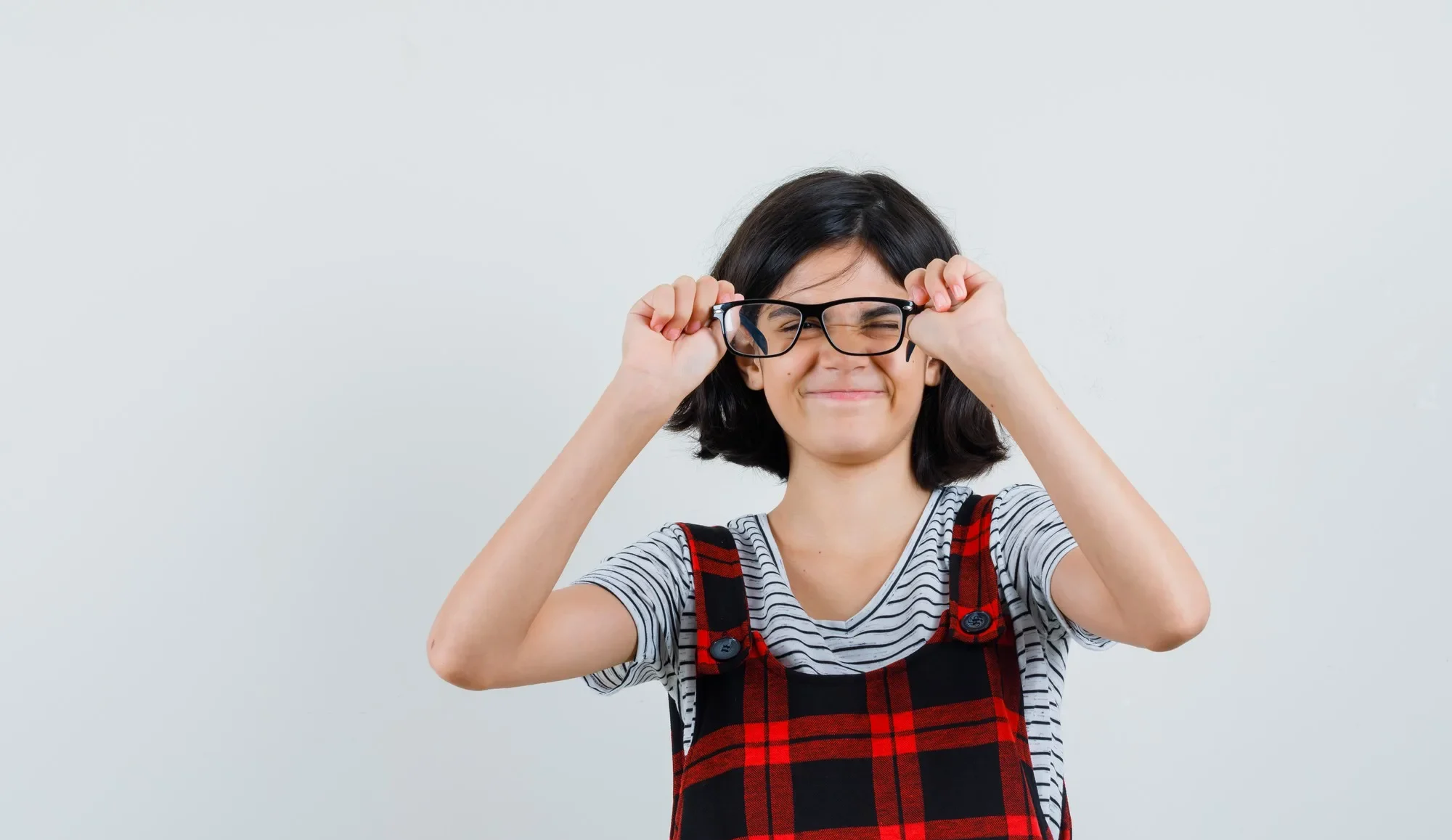
Frequent squinting when looking at distant objects, such as the television, road signs or people across the room, is one of the most common child myopia symptoms.
Squinting temporarily improves focus by reducing the amount of scattered light entering the eye, but it also indicates that your child is struggling to see clearly.
Sitting Too Close to Screens
Children with myopia often sit unusually close to the television, computer or tablet because near objects remain clear while distant ones blur.
If your child consistently moves closer to screens or holds books and devices very near their face, it may signal difficulty seeing at normal distances.
Difficulty Seeing the Board at School
Teachers may notice that your child struggles to read information written on the classroom whiteboard or repeatedly asks classmates what has been written.
Academic performance may decline, not due to comprehension issues, but simply because your child cannot see the material clearly from their seat.
Frequent Headaches and Eye Rubbing
Persistent headaches, particularly after school or screen time, may be associated with visual strain, although headaches are not specific to myopia.
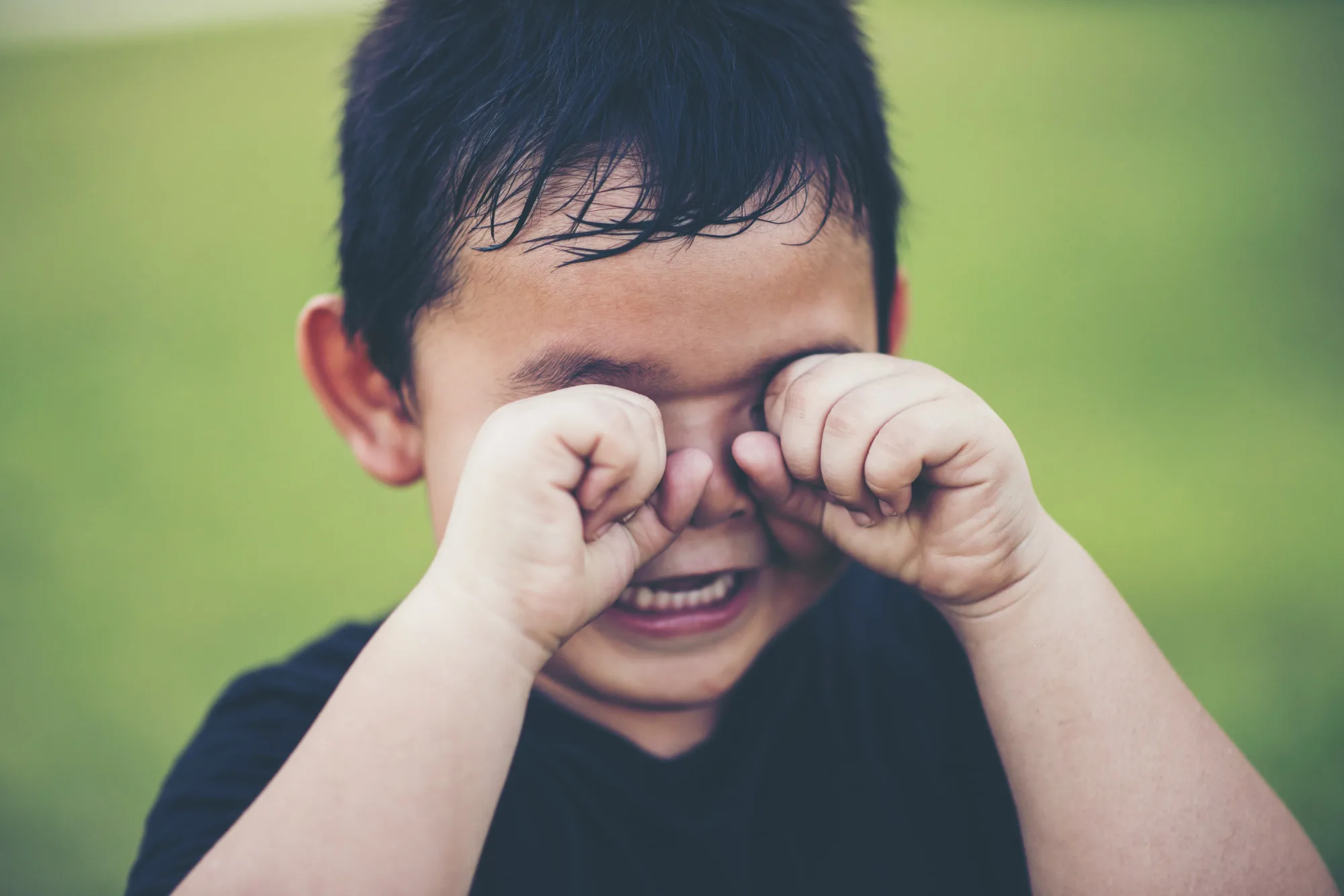
Frequent eye rubbing, especially when tired, may indicate eye discomfort or fatigue, but it is not a specific sign of myopia.
Losing Interest in Outdoor Activities
Children who struggle to see distant objects may avoid sports or outdoor play that require good distance vision, such as catching balls, cycling or recognising friends from afar.
A sudden reluctance to participate in activities they once enjoyed could reflect underlying vision difficulties.
Why Catching Myopia Early Actually Matters
Early detection of child myopia symptoms allows for timely intervention, which can help manage myopia progression and reduce the risk of complications later in life.
High myopia, defined as severe short-sightedness, increases the risk of serious eye conditions in adulthood, including retinal detachment, glaucoma, cataracts and myopic maculopathy.
Addressing myopia early also supports your child’s academic performance, confidence and participation in sports and social activities, ensuring they do not miss critical developmental experiences due to poor vision.
Children who receive appropriate optical correction and management strategies can maintain functional vision, reduce eye strain and enjoy daily activities comfortably.
When to Book an Eye Examination
Eye examinations are essential for detecting myopia, even in children who do not report vision problems.
Regular vision assessments during childhood can help identify refractive errors and other vision problems early. Children with suspected visual impairment or concerning visual behaviours should be assessed promptly by an eye care professional.
Schedule an eye examination promptly if your child exhibits any child myopia symptoms, including squinting, sitting close to screens, difficulty seeing distant objects, frequent headaches or declining school performance.
Early professional evaluation ensures accurate diagnosis and appropriate management, whether through corrective lenses, lifestyle adjustments or myopia control interventions.
How Myopia Is Diagnosed in Children
A comprehensive paediatric eye examination includes several assessments to evaluate vision and eye health.
Visual acuity testing measures how clearly your child can see at various distances, typically using age-appropriate charts with letters, symbols or pictures.
Refraction assessment determines the exact prescription needed to correct vision, often using automated instruments or manual techniques with trial lenses.
Additional tests may assess eye alignment, focusing ability, eye movement and overall ocular health to rule out other conditions that could affect vision or mimic myopia symptoms.
What Happens After Diagnosis
Once myopia is diagnosed, the eye care professional will discuss corrective options and management strategies tailored to your child’s age, lifestyle and degree of myopia.
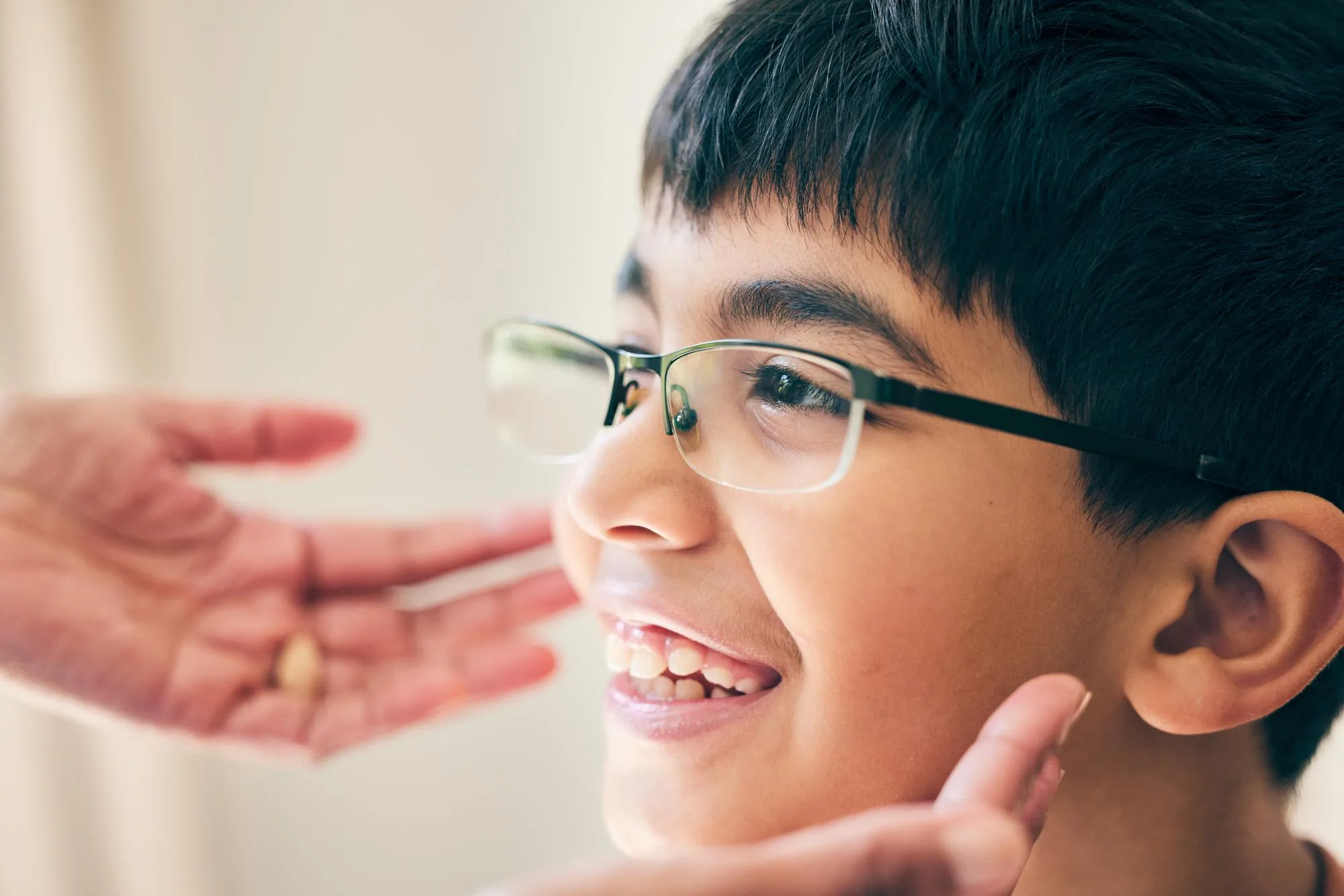
- Spectacles remain the most common and straightforward option for children, providing clear distance vision and reducing eye strain during school and daily activities.
- Contact lenses may be considered for older children or those involved in sports, offering functional vision without the limitations of spectacle frames.
- Myopia control interventions, including specially designed spectacle or contact lenses, low-dose atropine eye drops, or orthokeratology lenses, may be recommended to slow the progression of myopia and reduce the risk of high myopia in adulthood.
- Regular follow-up examinations are essential to monitor progression, update prescriptions and adjust management strategies as your child’s eyes continue to grow.
Supporting Your Child’s Vision at Home
Parents can support their child’s eye health and help reduce the risk of developing myopia through simple lifestyle adjustments.
Encourage outdoor play for around two hours daily, as increased time outdoors is associated with a lower risk of developing myopia. While outdoor time remains beneficial for children who already have myopia, evidence for its effect on slowing existing myopia progression is less definitive.
Limit prolonged near work and screen time, ensuring regular breaks. The 20-20-20 rule — every 20 minutes, look at something 20 feet away for 20 seconds — can be a useful way to encourage regular visual breaks and reduce prolonged near focusing.
Maintain proper lighting and posture during reading, homework or device use, positioning materials at a comfortable distance and ensuring adequate illumination to reduce eye strain.
Ensure your child wears their prescribed spectacles or contact lenses as advised by their eye care professional. Undercorrecting myopia is not recommended as a strategy to slow myopia progression.
Take the First Step Toward Clearer Vision
Recognising child myopia symptoms early and seeking professional evaluation ensures your child receives the support they need for clear, comfortable vision and long-term eye health.
If you have noticed any signs of vision difficulty in your child, consult Dr. Chai Khai Siang, Consultant Ophthalmologist for a comprehensive eye examination and professional advice on appropriate corrective and myopia management options for your child’s individual needs.