When discussing dry eye disease, many people focus mainly on the tears themselves. However, the health of the eyelids and lid margins also plays a major role in maintaining a stable tear film and comfortable eyes. Problems affecting the eyelid margins can disrupt tear film stability, increase irritation, and worsen dry eye symptoms over time.
This is why maintaining eyelid care and lid margin health are often important parts of dry eye management, especially in people with meibomian gland dysfunction (MGD) or chronic eyelid irritation.
This article explains how eyelid care, lid margin health, and eyelid oil gland function can affect dry eye symptoms, and why looking after the eyelids may be an important part of dry eye management.
Why Eyelids Matter in Dry Eye Disease
The eyelids do more than protect the eyes. With every blink, the eyelids help to maintain a healthy tear film by spreading tears evenly across ocular surface.
A complete blink helps to:
Spread tears evenly across the eye surface
Reduce friction during blinking
Refresh the tear film
Release oil from the eyelid glands into the tear film
Support a smoother surface for clear vision
The oily part of the tear film is produced by the meibomian glands along the eyelid margins. When these glands are not functioning well, tear evaporation can increase and dry eye disease may become more noticeable.
What Is the Lid Margin?
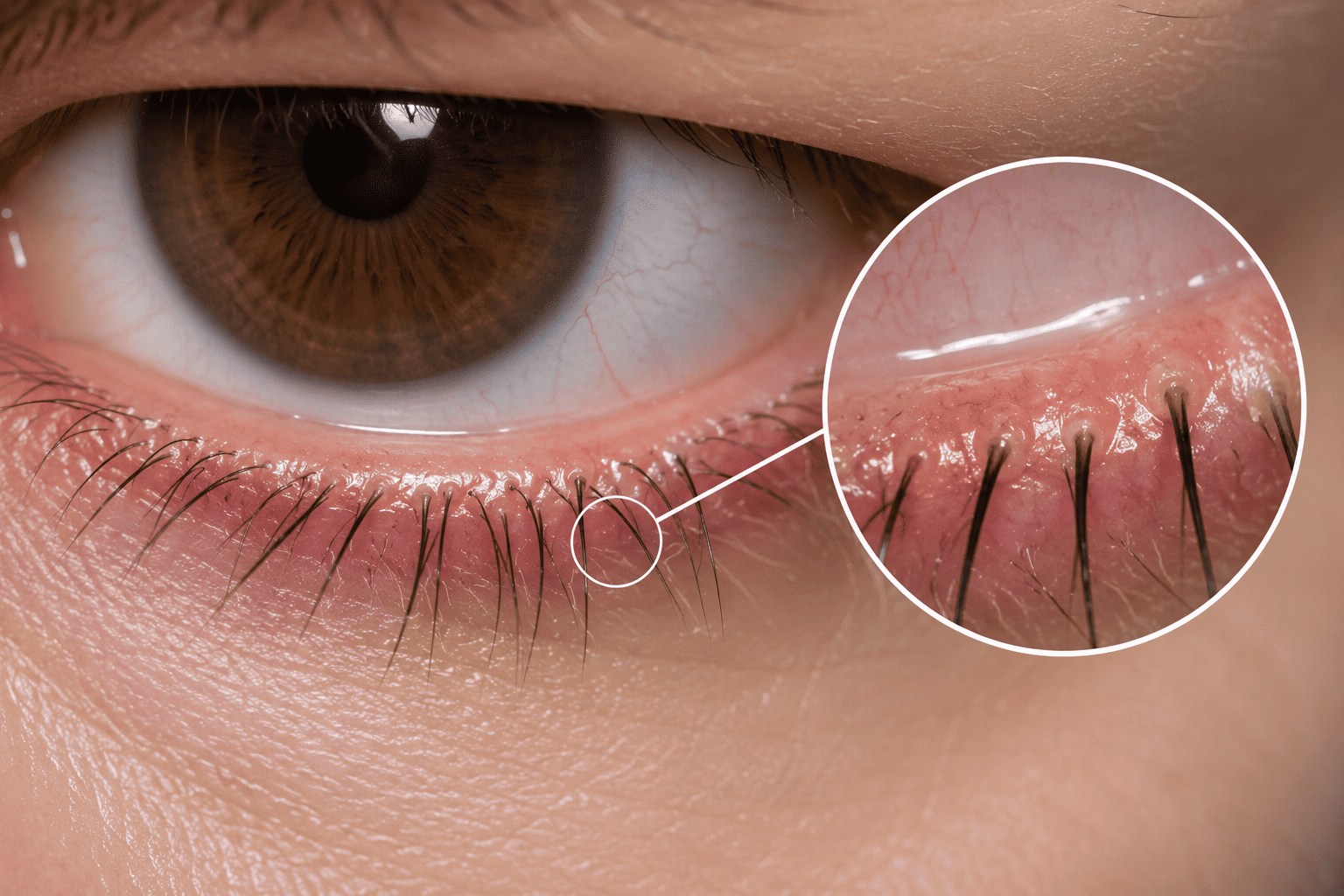
The lid margin is the edge of the eyelid near the eyelashes. It is a small area, but it play an important role in maintaining tear film stability. It contains the openings of the meibomian glands, which release oil into the tear film.
If the lid margin becomes inflamed, oily, crusted, or blocked, the meibomian glands may not release oil properly. When the tear film does not have enough healthy oil, tears may evaporate faster, reducing tear film stability. This can make the eyes feel dry even when tears are still being produced.
Patients may notice that symptoms are worse in air-conditioning, during screen use, or later in the day. These situations place more stress on an already unstable tear film.
The Link Between Meibomian Gland Dysfunction and Dry Eye
Meibomian gland dysfunction, or MGD, happens when the eyelid oil glands do not work properly. The glands may become blocked, inflamed, or produce abnormal oil that is too thick or poorer quality than normal.
When this happens, the oily layer of the tear film becomes less effective. Tears may evaporate more quickly, and the eye surface may become more easily irritated. This is why MGD is closely linked to evaporative dry eye.
Blepharitis and Lid Margin Inflammation
Blepharitis is inflammation of the eyelid margins and can affect the area around the eyelashes or the oil glands within the lids. Patients may notice eyelid irritation, crusting, redness along the lid margin, or a gritty sensation in the eyes.
Blepharitis is closely linked to dry eye disease because ongoing eyelid inflammation can disrupt the tear film and make it break up more quickly.
How Poor Lid Margin Health Can Affect Vision
Dry eye symptoms are not limited to discomfort. Poor lid margin health can also affect visual clarity.
When the tear film evaporates too quickly or spreads unevenly, vision may become blurry or fluctuate. Some patients notice that their vision clears briefly after blinking, then becomes blurry again. This happens because each blink temporarily smooths the tear film across the eye surface.
If the eyelid glands are not releasing enough healthy oil, the tear film may not stay stable for long. This can make reading, computer work, and driving feel more tiring.
Eyelid or Tear Film Issue | How It May Affect Dry Eye Symptoms |
Blocked meibomian glands | Tears may evaporate too quickly |
Inflamed lid margin | The eye surface may become more irritated |
Poor eyelid hygiene | Oil, debris, or crusting may build up around the lashes |
Incomplete blinking | Tears and oils may not spread evenly |
Blepharitis | Eyelid inflammation may worsen tear film instability |
Why Eyelid Hygiene May Help Some Patients
For patients with lid margin inflammation, blepharitis, or meibomian gland dysfunction, eyelid hygiene may be part of dry eye management. It may help reduce debris, excess oil build-up, and irritation around the eyelid margins, which can support healthier meibomian gland function over time.
Common eyelid care steps may include:
Cleaning the eyelid margins gently as advised
Using warm compresses if recommended
Avoiding rubbing the eyes
Removing debris around the lash line carefully
Using suitable eyelid cleansing products when appropriate
Patients should avoid harsh scrubbing or unsuitable products around the eyes, as these may worsen irritation.
Warm Compresses and Oil Gland Function
Warm compresses are commonly recommended when meibomian gland dysfunction is involved. Gentle warmth may help soften thickened oil secretions within the glands, which can support better oil flow into the tear film.
Warm compresses are usually used as part of a structured eyelid care routine, especially when oil gland function is affected. Technique, temperature, and consistency all matter, so patients should follow appropriate guidance, particularly if they have sensitive eyes, recent eye surgery, or other eye conditions.
Hormonal Changes and Eyelid Oil Glands
Hormonal changes may also influence dry eye symptoms and meibomian gland function. This is one reason some patients, especially women during certain life stages, may notice more dry eye symptoms.
Hormonal changes can affect tear quality, tear production, and eyelid gland function. For some patients, this may contribute to unstable tears, faster evaporation, or recurring irritation. This connection is why hormonal changes and dry eye disease can be an important topic when symptoms are persistent or appear during specific life stages.
Daily Habits That May Affect Lid Margin Health
Eyelid care is not only about cleaning the eyelids. Daily habits can also affect tear film stability and eyelid health throughout the day.
Patients may notice worse symptoms when they spend long hours on screens, sit under air-conditioning, wear contact lenses for extended periods, or frequently rub their eyes. These habits can increase tear film stress and may worsen symptoms if the lid margin is already inflamed.
Good daily habits may include taking screen breaks, blinking fully during focused work, avoiding direct airflow, and following proper contact lens hygiene. These habits help reduce strain on the tear film and eyelid margins.
Conclusion
Eyelid care and lid margin health play an important role in maintaining tear film stability and ocular comfort. When the eyelid margins or meibomian glands are affected, dry eye symptoms may become more noticeable and persistent.
Understanding this connection helps explain why proper eyelid hygiene and gland care are often important parts of dry eye management.
However, if symptoms continue despite regular eyelid care, a proper eye assessment may help identify whether they are related to meibomian gland dysfunction, blepharitis, lid margin inflammation, or other ocular surface conditions. Eye doctors such as Dr. Paul Lim Chern Pin, Consultant Ophthalmologist, may assess eyelid health as part of dry eye management and recommend suitable care based on the underlying cause.