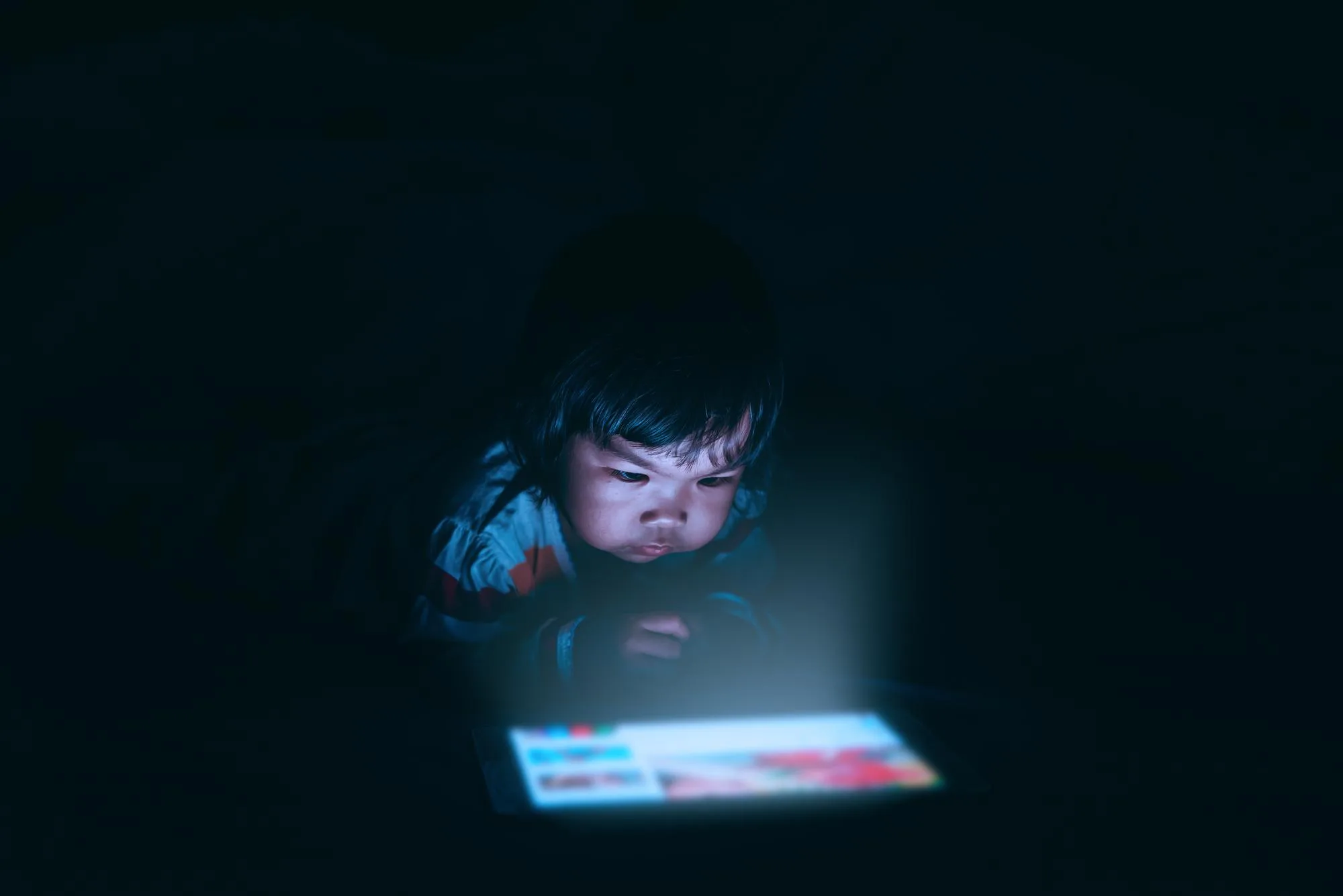
Childhood myopia rates have surged globally over the past two decades, with screen time often cited as a contributing factor.
As digital devices become essential for education and entertainment, parents worry whether tablets, smartphones and computers are damaging their children’s eyesight. The relationship between screen time and myopia is complex, involving multiple environmental and behavioural factors.
Understanding this connection helps parents make informed decisions about their children’s visual health and daily habits.
Key Takeaways
- Prolonged near work, including screen time, may contribute to myopia development and progression in children
- Reduced outdoor time combined with excessive device use may increase myopia risk, as both prolonged near work and limited outdoor exposure are associated with myopia
- The 20-20-20 rule, proper lighting and screen distance can help reduce visual strain during device use
- Regular vision screening and appropriate eye examinations allow early detection and management of childhood myopia progression
What the Research Actually Says
Multiple studies have examined the relationship between screen time and childhood myopia, with findings suggesting an association rather than direct causation.
Children who spend more time on near-work activities, including digital device use, show higher rates of myopia development. However, isolating screen time as the sole factor remains challenging, since device use often occurs alongside reduced outdoor activity and prolonged close-range focus.
Digital devices can encourage sustained close-range focus with limited breaks, particularly when handheld devices are used at short viewing distances. This may increase visual strain and overall near-work exposure.
Blue light has also been studied, though current evidence does not conclusively link it to structural myopia progression. Instead, overall screen time, prolonged near work, short viewing distances and reduced outdoor exposure are more relevant considerations when discussing myopia risk.

Why Outdoor Time Matters More Than You Think
One of the most consistent protective factors against childhood myopia is regular outdoor activity.
Studies suggest that children who spend more time outdoors have a lower risk of developing myopia. The World Health Organization recommends at least 90 minutes outdoors during daylight hours as one strategy that may help delay myopia onset and slow its progression. Natural light exposure and the opportunity for distance viewing may contribute to this protective effect.
The concern arises when screen time displaces outdoor activity. Children who spend several hours daily on devices may have less opportunity for outdoor activity, potentially increasing their overall myopia risk.
This displacement effect may partly contribute to the observed association between screen time and myopia, although the relationship involves multiple environmental, behavioural and genetic factors.
Screen Habits That Strain Young Eyes
Certain screen-use patterns place additional stress on children’s developing visual systems.
Prolonged Uninterrupted Sessions
Children often engage with devices for extended periods without breaks, maintaining close focus that demands continuous accommodation. This sustained near work can lead to eye fatigue and has been associated with a higher risk of myopia, although it should not be stated that accommodative strain itself directly causes axial elongation.
Poor Viewing Distance
Handheld devices such as smartphones and tablets are frequently held at short viewing distances. Very close near work increases accommodative demand compared with viewing the same material from farther away and may contribute to visual discomfort.
Inadequate Lighting
Using screens in dim environments or with excessive glare may contribute to visual discomfort and eye strain. Proper ambient lighting reduces contrast stress and supports comfortable viewing.
Reduced Blink Rate
Screen engagement decreases blink frequency, which can lead to dry eye symptoms and discomfort. While not directly linked to myopia, these symptoms may discourage breaks and outdoor activity.
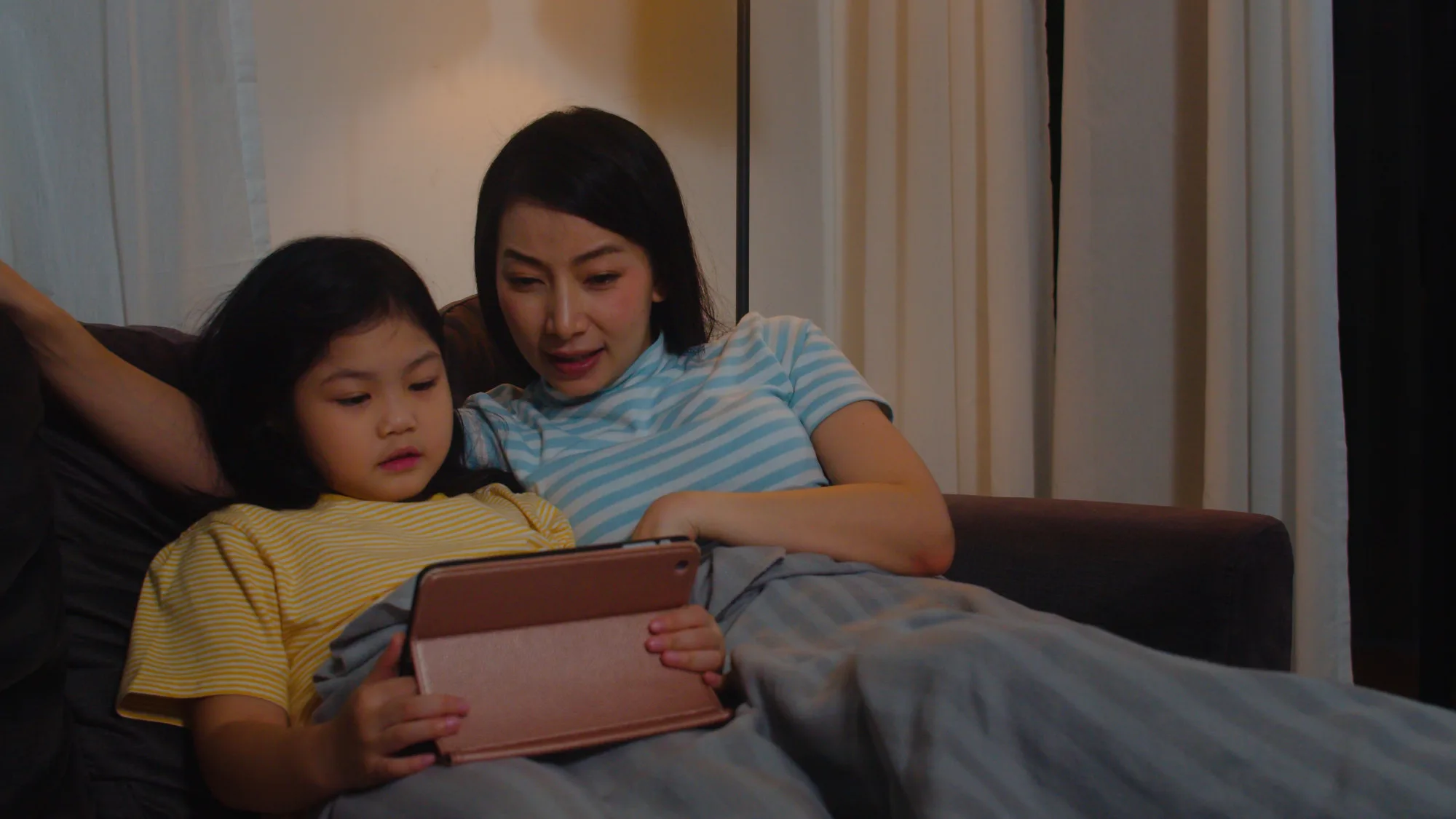
Practical Strategies Parents Can Use Today
Managing screen time and supporting eye health requires a balanced approach that acknowledges the role of technology in modern childhood.
| Strategy | Implementation | Expected Benefit |
|---|---|---|
| 20-20-20 Rule | Every 20 minutes, look at something 20 feet away for 20 seconds | Reduces accommodative fatigue and eye strain |
| Screen Distance | Maintain 40-50 cm for handheld devices, 50-70 cm for computers | Decreases near-work demand on focusing muscles |
| Outdoor Time | Aim for 90-120 minutes daily outdoors | May slow myopia progression and support eye development |
| Lighting Control | Use adequate ambient lighting, avoid glare on screens | Reduces visual discomfort and strain |
Set Clear Time Limits
Establish daily screen time boundaries appropriate for your child’s age and needs. Educational screen use may differ from recreational use, but both contribute to total near-work time.
Encourage Active Breaks
Integrate physical activity and outdoor play into daily routines. Even short outdoor breaks between screen sessions provide distance viewing opportunities and reduce continuous near focus.
Optimise Device Settings
Adjust screen brightness to match ambient lighting, increase text size to reduce squinting, and enable features that remind children to take breaks.
When to Schedule an Eye Examination
Regular paediatric eye examinations are essential for detecting myopia early and monitoring progression in children.
Children should have comprehensive eye exams starting around age three to four, with follow-ups every one to two years or as recommended by an eye care professional. If myopia is detected, more frequent monitoring may be necessary to track progression and adjust management strategies.
Parents should seek prompt evaluation if children exhibit signs such as squinting, sitting close to screens or books, frequent headaches, eye rubbing or difficulty seeing distant objects clearly. Early detection allows timely intervention, which may include corrective lenses, behavioural modifications or myopia control strategies depending on individual circumstances.
Beyond Screens: The Full Picture
While screen time contributes to the modern myopia epidemic, it represents one factor within a broader context.
Genetics play a significant role, with children of myopic parents at higher risk regardless of screen habits, much like other inherited vision conditions such as lazy eye that also run in families.
Focusing solely on limiting screen time without addressing these other factors may provide incomplete protection. A comprehensive approach includes balancing near and distance activities, prioritising outdoor time, ensuring proper lighting and ergonomics, and maintaining regular eye care.
Parents should also recognise that screens are integral to education and social connection for today’s children. Complete elimination is neither practical nor necessary; instead, mindful management and healthy visual habits offer realistic protection.
Supporting Lifelong Eye Health
Establishing healthy visual habits during childhood sets the foundation for long-term eye health.
Teaching children to recognise eye fatigue, take regular breaks and balance screen time with outdoor activity helps them develop awareness and self-regulation. Parents can model this by managing their own screen habits, participating in outdoor activities together and creating screen-free zones or times, such as during meals or before bedtime.
Nutrition also supports eye development, with diets rich in vitamins A, C and E, omega-3 fatty acids and antioxidants potentially benefiting overall ocular health. While nutrition alone cannot prevent myopia, it complements other protective strategies.
Making Informed Decisions for Your Child
The evidence suggests that screen time, particularly when combined with reduced outdoor activity and prolonged near work, may increase myopia risk in children.
However, screens themselves are not the sole culprit. The pattern of use, duration, viewing distance, lighting conditions and displacement of protective activities all contribute to the overall risk profile.
Parents can support their children’s visual health by implementing practical strategies such as the 20-20-20 rule, maintaining proper screen distance, ensuring adequate outdoor time and scheduling regular eye examinations. These measures, combined with awareness of individual risk factors, form a comprehensive approach to managing childhood myopia risk.
If you’re concerned about your child’s vision or screen time habits, schedule a comprehensive eye examination to assess their eye health and receive personalised guidance for protecting their vision.