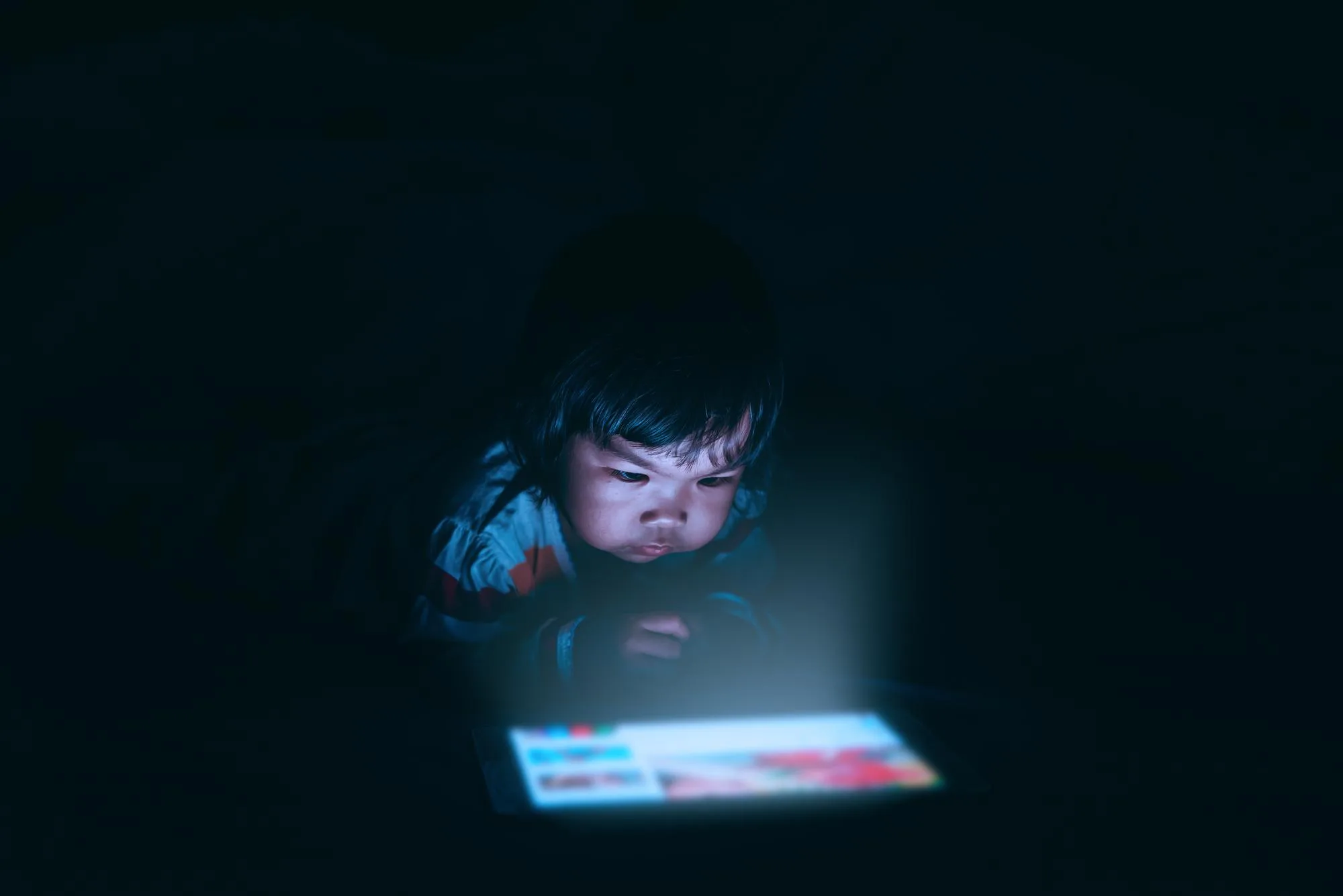
Many people with dry eye disease notice that bright light feels more uncomfortable than usual. Sunlight, computer screens, headlights, or even indoor lighting may start to feel irritating or harder to tolerate. This symptom is known as light sensitivity, or photophobia, and it can sometimes become more noticeable when the tear film is unstable.
Although light sensitivity can happen in different eye conditions, it is also commonly linked to dry eye disease because ocular surface irritation can make the eyes more sensitive to light.
This article explains why dry eye disease may increase sensitivity to light, how tear film instability affects the eye surface, what patients may notice in daily life, and why light sensitivity should be understood together with other symptoms.
Why Light Sensitivity Can Happen in Dry Eye Disease
The front surface of the eye is protected by the tear film. This thin layer keeps the eye moist, smooth, and comfortable. It also helps create a clear surface for light to enter the eye evenly.
When the tear film is unstable, the eye surface may become exposed between blinks. This can cause irritation, inflammation, and discomfort. As the eye becomes more sensitive, normal light may start to feel stronger or more uncomfortable.
Patients may notice this in situations such as:
Stepping outdoors into bright sunlight
Looking at a bright computer or phone screen
Driving at night with oncoming headlights
Sitting under strong indoor lighting
Reading in glare or reflective light
In these situations, the issue is not always the light alone. The eye surface may already be irritated, so light becomes harder to tolerate.
The Role of the Tear Film in Visual Comfort
A stable tear film helps light pass smoothly through the front of the eye. When the tear film breaks up too quickly, the surface becomes less even. This may cause blurred vision, glare, and visual discomfort.
Patients with dry eye may describe their vision as clear one moment and hazy the next. Blinking may briefly improve clarity because it spreads the tear film across the eye surface. If the tear film becomes unstable again, the discomfort can return.
This is why light sensitivity may appear together with fluctuating vision. When the tear film distribution is uneven, light entering the eye is no longer smooth. This can cause glare, halos, fluctuating vision and increased sensitivity to bright light. .
Light Sensitivity Is Not Always the Main Symptom
Some patients with dry eye disease mainly experience dryness or burning. Others may notice grittiness, watery eyes, blurred vision, or tired eyes. Light sensitivity may be mild for some patients and more noticeable for others.
What Patients Notice | How It May Relate to Dry Eye |
Bright light feels uncomfortable | The eye surface may be irritated or more sensitive |
Screen brightness feels harsh | Reduced blinking may worsen tear film instability |
Night driving feels tiring | Glare may feel stronger when the tear film is uneven |
Vision clears briefly after blinking | The tear film may be temporarily smoothing the eye surface |
Light sensitivity worsens with burning or grittiness | Ocular surface irritation may be contributing |
Why Screens May Make Light Sensitivity More Noticeable
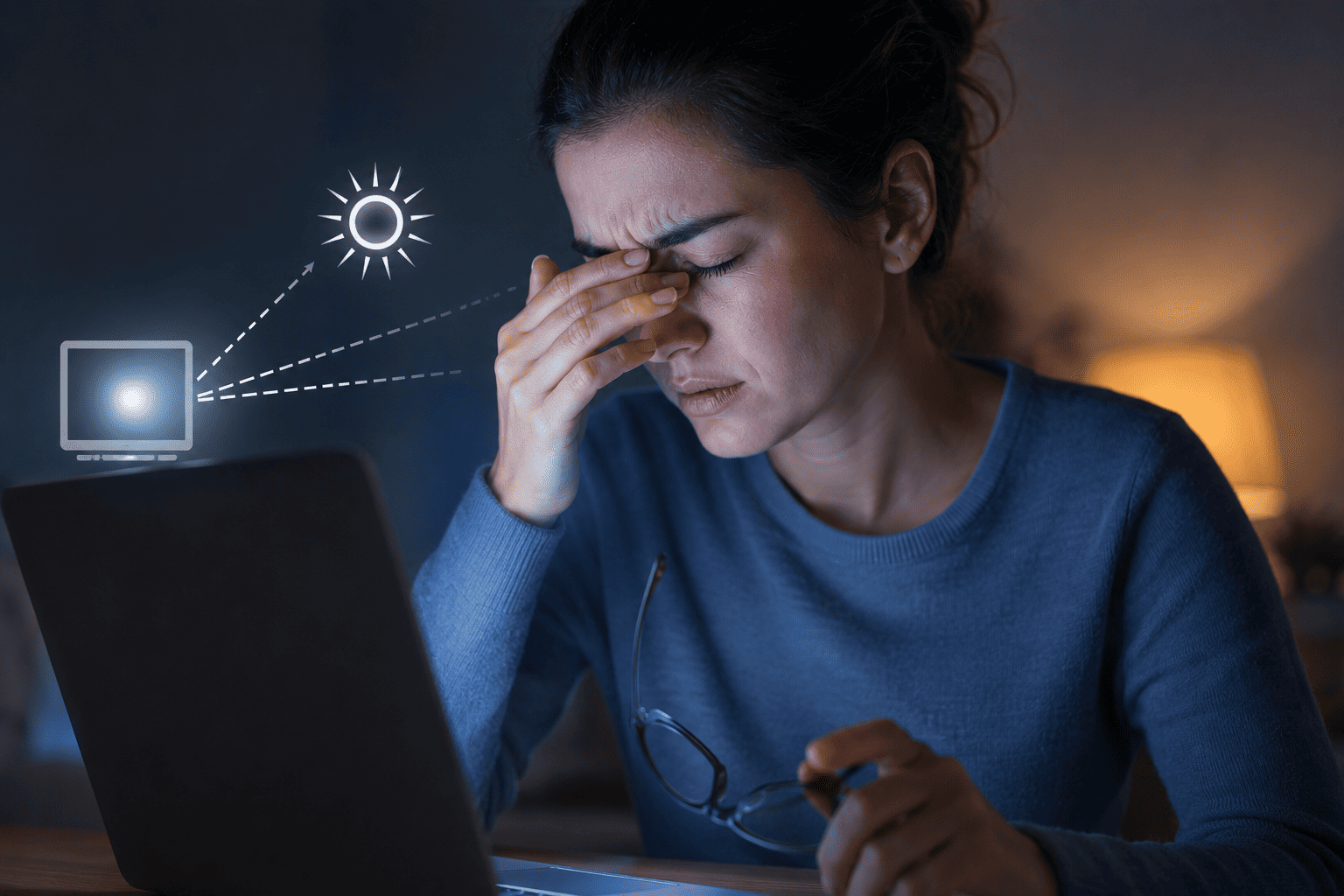
Screens can make light sensitivity feel worse because they combine brightness, prolonged visual focus, and reduced blinking. When blinking decreases, the tear film may break up more quickly, leaving the eye surface drier and more irritated.
A patient may feel that the screen is too bright even when the setting has not changed. Screen glare, small text, poor contrast, and air-conditioning can add further discomfort.
For patients who spend long hours on digital devices, reducing screen brightness may help, but discomfort is often caused by a combination of poor blinking habits, prolonged screen time and tear film instability.
Why Night Driving Can Feel More Uncomfortable
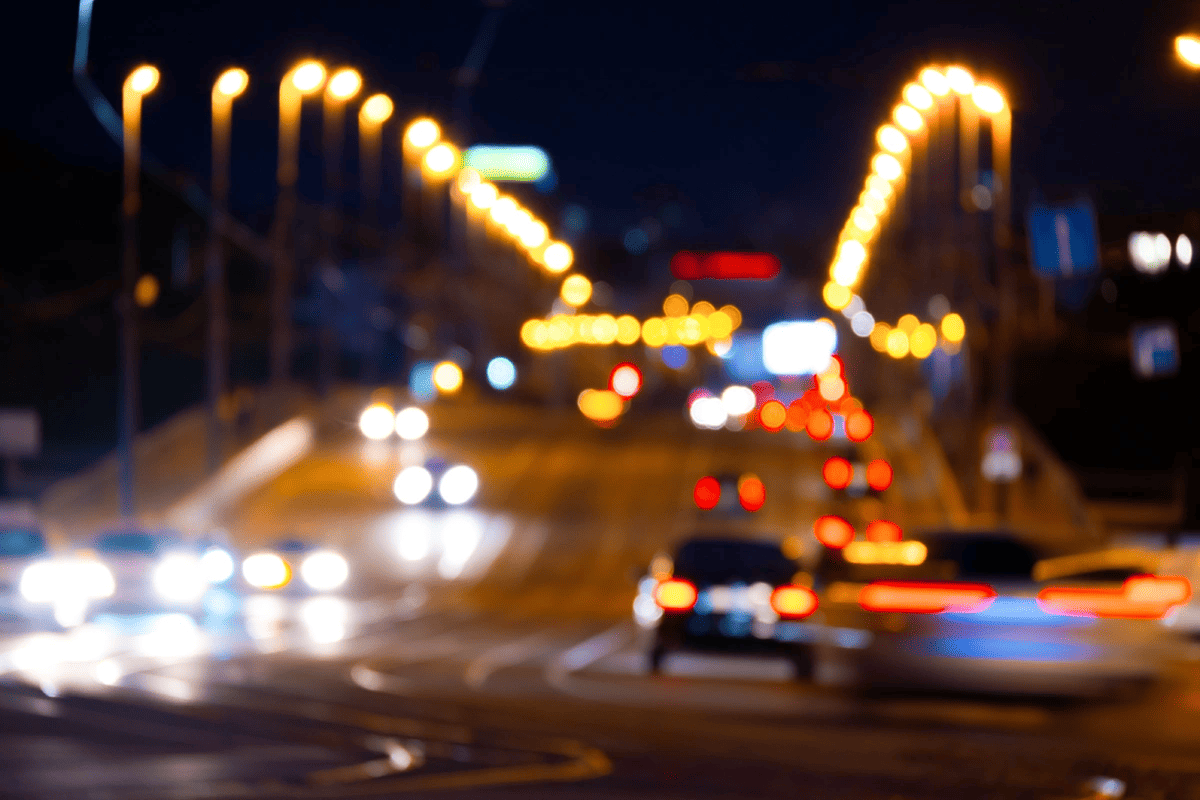
Some patients with dry eye disease notice more discomfort during night driving. Headlights, streetlights, and glare from wet roads can feel stronger when the tear film is unstable.
Dry eye-related night driving discomfort may happen because:
The tear film becomes uneven during visual focus
Blinking may reduce while concentrating on the road
Car air-conditioning may increase tear evaporation
Glare may feel stronger when vision is fluctuating
This does not mean every case of night glare is caused by dry eyes. Cataract, uncorrected vision, corneal issues, and other eye conditions can also affect night driving comfort. The overall symptom pattern matters.
Dry Eye-Related Light Sensitivity vs Other Causes
Light sensitivity can occur in dry eye disease, but it can also be linked to other eye or health conditions. This is why the symptom should be considered in context, especially when it appears together with pain, redness, headache, or sudden vision changes.
Feature | Dry Eye-Related Light Sensitivity | Other Possible Causes |
Common pattern | Occurs with dryness, burning, grittiness, or fluctuating vision | May occur with pain, redness, headache, or sudden vision changes |
Trigger | Screens, bright light, air-conditioning, wind, night glare | Infection, inflammation, migraine, corneal problems, and other eye conditions |
Vision pattern | May improve briefly after blinking | May not improve with blinking |
Eye surface link | Tear film instability may irritate the ocular surface | Cause may involve other eye structures or systemic conditions |
This comparison is useful because light sensitivity should not automatically be assumed to be dry eye. It should be understood together with the timing, severity, and other symptoms.
How Patients Can Reduce Light-Related Discomfort
For patients whose light sensitivity is linked to dry eye symptoms, reducing tear film stress may help improve comfort.
Practical steps may include:
Using lubricating eye drops as advised
Taking regular breaks from screens
Blinking fully during focused tasks
Reducing direct air-conditioning or fan exposure
Adjusting screen brightness and contrast
Wearing sunglasses outdoors
Avoiding smoke, dust, and wind exposure when possible
Keeping car air vents away from the face during driving
Using humidifier to increase indoor humidity
These steps may help reduce irritation, but they may not address every cause of light sensitivity. If light sensitivity is sudden, severe, painful, or linked with vision loss, it should not be treated as ordinary dry eye discomfort.
How Diagnosis Helps Clarify the Cause
Because light sensitivity can have several causes, clinical assessment may be helpful when symptoms are persistent or unusual. In dry eye disease, an eye care professional may assess the tear film, eyelid health, ocular surface, and signs of inflammation.
This article on how dry eye disease is diagnosed in clinical practice can help patients understand what may be assessed during an eye examination.
Persistent or troublesome light sensitivity should not be assumed to be caused by dry eye alone. A comprehensive eye assessment can help determine whether tear film instability, ocular surface disease, or another eye condition is contributing to the symptoms. Eye doctors such as Dr. Vienne Tai Pih Yih, Consultant Ophthalmologist, may assess the tear film, eyelid health, ocular surface, and signs of inflammation as part of the evaluation.
Patients preparing for an appointment may also find it useful to note when light sensitivity happens, whether it is linked to screen use or glare, and whether blinking temporarily improves the symptoms.
Conclusion
Dry eye disease can increase sensitivity to light because tear film instability and ocular surface irritation make the eyes more vulnerable to visual discomfort. Symptoms may become more noticeable during screen use, outdoor exposure, or later in the day when the tear film becomes more stressed.
Understanding this connection can help patients recognise why light sensitivity occurs and when proper dry eye assessment and management may be beneficial.