Myopia, commonly known as short-sightedness, is becoming increasingly prevalent among children in Malaysia and across the globe. Once considered a minor inconvenience, myopia in childhood can progress rapidly, leading to high degrees of refractive error that increase the risk of sight-threatening complications later in life.
As a parent, understanding how myopia develops and what interventions may help slow its progression empowers you to make informed decisions about your child’s visual health.
This guide explores evidence-based strategies for myopia control in children, from outdoor time and screen habits to optical interventions and regular monitoring.
Key Takeaways
- Myopia in children often progresses during school years, making early intervention important for long-term eye health
- Increased outdoor time may help reduce the risk of developing myopia, while healthy near-work habits may support overall myopia management
- Optical interventions such as specialised contact lenses and spectacle lenses are designed to slow myopia progression
- Regular eye examinations allow early detection and timely adjustments to management strategies
Why Myopia Control in Children Matters
Myopia typically begins in childhood, often between ages 6 and 12, and tends to worsen as children grow. The younger a child develops myopia, the more time the condition has to progress.
High myopia, generally defined as -6.00 dioptres (D) or greater in magnitude, increases the risk of complications such as retinal detachment, glaucoma, cataracts and myopic maculopathy in adulthood. These conditions can significantly affect quality of life and visual function.
Slowing myopia progression during childhood may reduce the final degree of short-sightedness, potentially lowering the risk of these complications. This makes myopia control an important consideration for parents and eye care professionals.
The Outdoor Time Advantage
Research suggests that children who spend more time outdoors may have a lower risk of developing myopia. The evidence is stronger for preventing or delaying the onset of myopia than for slowing the progression of existing myopia. The exact mechanism is not fully understood, but factors such as natural light exposure, distance viewing and reduced near work may all play a role.
Encouraging children to spend around 2 hours outdoors daily, , particularly during daylight hours, may support their visual development. Activities such as playing in the park, walking to school or participating in outdoor sports can contribute to this time.
Outdoor time complements other myopia control strategies and supports overall health and well-being, making it a practical and accessible intervention for many families.
Managing Screen Time and Near Work
Prolonged or very close near work, including reading, homework and screen use, has been associated with a greater risk of myopia in children. Modern lifestyles often involve extended periods of close-up tasks, placing sustained demands on the visual system.
Maintain an Appropriate Working Distance
Books and devices should be held at least 30 to 40 centimetres from the eyes, with good posture and adequate lighting when reading or using screens.
Balance Near Work with Outdoor Activities
While reducing screen time alone cannot be expected to stop myopia progression, balancing near work with outdoor activities and taking regular breaks from prolonged close-up tasks supports healthier visual habits.
Optical Interventions That Slow Progression
Several optical interventions have been developed specifically to slow myopia progression in children. These work by creating specific patterns of retinal defocus that are intended to reduce signals associated with excessive eye growth.
Orthokeratology (Ortho-K)
Orthokeratology involves wearing specially designed rigid contact lenses overnight. These lenses gently reshape the cornea while the child sleeps, temporarily correcting myopia during the day without the need for spectacles or daytime contact lenses.
Studies suggest that ortho-k may slow myopia progression in some children. The lenses must be worn consistently and require regular follow-up with an eye care professional to monitor corneal health and lens fit. As with other contact lenses, proper hygiene is essential because contact lens wear carries a risk of corneal infection.
Myopia Control Spectacle Lenses
Specialised spectacle lenses with unique optical designs have been developed to slow myopia progression. These lenses provide clear central vision while incorporating myopia-control optical designs that may reduce the stimulus for eye elongation.
These lenses are worn like regular spectacles and are suitable for children who prefer not to wear contact lenses or who are too young for other interventions.
Multifocal and Dual-Focus Contact Lenses
Soft contact lenses designed for myopia control use multifocal or dual-focus designs to simultaneously provide clear distance vision and myopic defocus. Clinical trials have shown that these lenses may slow myopia progression in children.
Contact lens wear requires maturity and good hygiene habits. Parents and eye care professionals should assess whether a child is ready for contact lens wear and provide appropriate training and supervision.
The Role of Atropine Eye Drops
Low-dose atropine eye drops have been studied extensively for myopia control in children. Atropine can dilate the pupil and affect the eye’s focusing ability; at low concentrations, it has been shown to slow myopia progression in many children.
Atropine treatment should be prescribed and monitored by an ophthalmologist, with the concentration, frequency and duration of use tailored to each child’s needs.
Potential side effects, such as light sensitivity, pupil dilation, allergic reactions or mild blurred near vision. Lower concentrations generally produce fewer visual side effects than higher concentrations. Regular follow-up is essential to assess effectiveness and adjust treatment as needed.
Regular Eye Exams Keep Control on Track
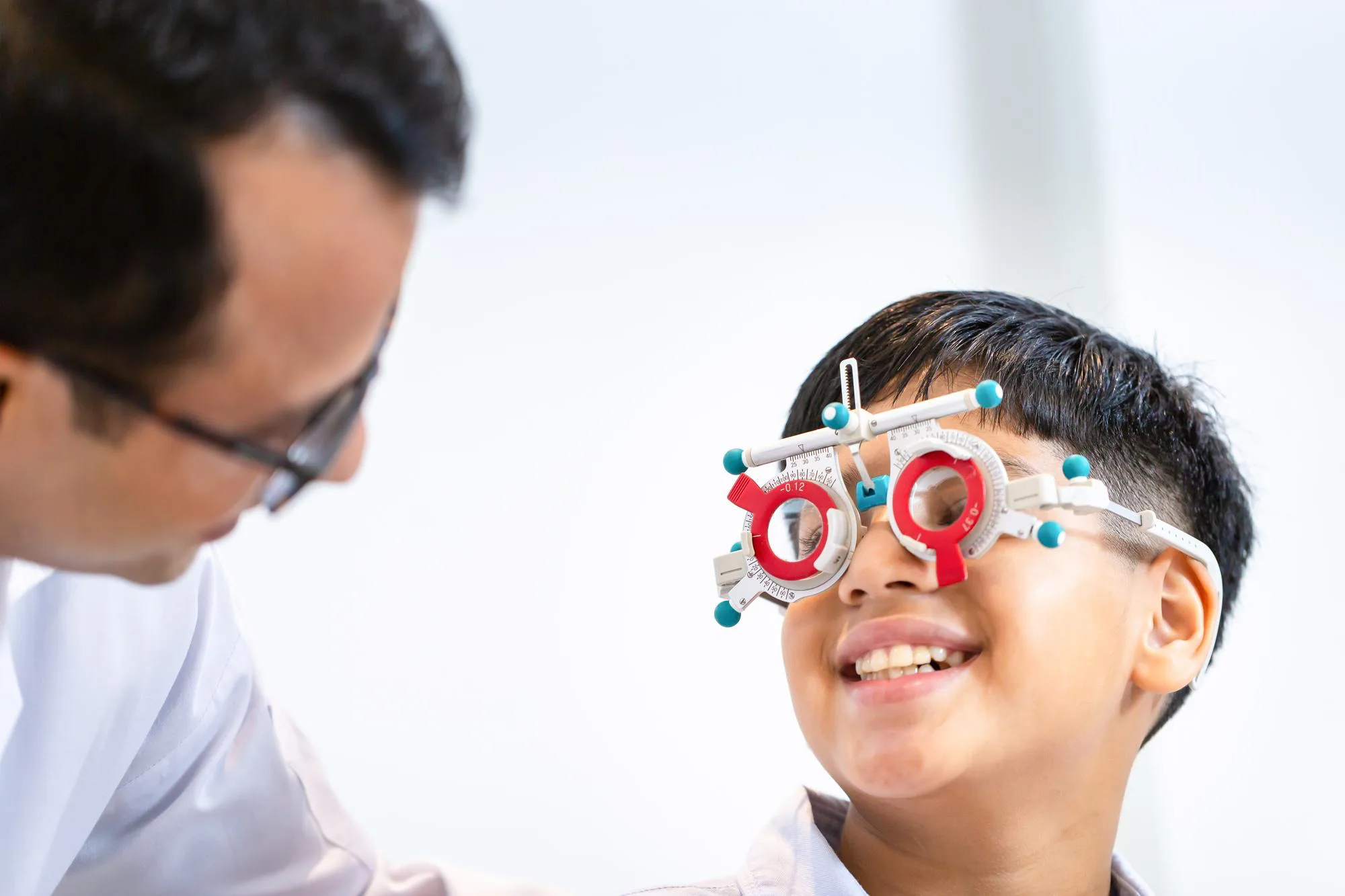
Consistent monitoring is a cornerstone of effective myopia control in children. Regular comprehensive eye examinations allow eye care professionals to track myopia progression, assess the effectiveness of interventions and make timely adjustments.
Children with myopia should typically have regular eye examinations, often annually, with more frequent follow-up when undergoing active myopia-control treatment or when recommended by their eye care professional.These exams include measurements of refractive error, and overall ocular health, while axial length may also be measured where appropriate and available.
Early detection of rapid progression enables parents and professionals to explore additional or alternative interventions, optimising outcomes for the child’s long-term visual health.
Creating a Myopia-Friendly Environment at Home
Parents can support myopia control by creating an environment that encourages healthy visual habits.
Ensure that study areas and play spaces have adequate lighting. Natural light is ideal, but bright, evenly distributed artificial lighting can provide a more comfortable environment during reading and homework.
Encourage children to take frequent breaks from near tasks and to engage in activities that involve distance viewing, such as playing outdoors, looking out of windows or participating in sports.
Limit recreational screen time where possible, and ensure that when screens are used, they are positioned at an appropriate distance and angle. Devices should be held or placed at least 30 to 40 centimetres from the eyes.
These small adjustments, when combined with appropriate myopia-control interventions and regular monitoring, form a comprehensive approach to managing myopia effectively.
Take the First Step Towards Healthier Vision
Myopia control in children requires a proactive, multi-faceted approach. From encouraging outdoor play and managing screen time to exploring optical interventions and maintaining regular eye exams, parents play a vital role in supporting their child’s visual development.
If your child has been diagnosed with myopia or you are concerned about their vision, consider scheduling a comprehensive eye examination with an experienced eye care professional. Early intervention and consistent monitoring may help slow progression and support long-term eye health.
Dr. Goh Yihui, Consultant Ophthalmologist, provides assessment and care for children with myopia and other eye conditions. A comprehensive eye examination can help determine the child’s current refractive status, assess the pattern of myopia progression and guide parents on suitable management options based on the child’s individual needs.