Presbyopia is an age-related condition that reduces the eye’s ability to focus on near objects, usually becoming noticeable in the early to mid-40s. Non-surgical treatments are the standard approach, focusing on restoring near vision, reducing visual fatigue, and supporting daily tasks such as reading, computer work, and digital devices use. These approaches form the foundation of long-term presbyopia management and vision care.
Why Non-Surgical Treatment Is the Preferred Approach
Non-surgical treatments are the first-line option for presbyopia because the condition is a predictable, progressive, and natural part of aging rather than a disease. As vision needs evolve over time, these options offer flexibility without permanent changes to the eyes.
Key advantages of non-surgical treatments include:
- Adjustable prescriptions to match evolving near-vision needs
- Lower risk compared to surgical procedures
- Immediate improvement in near vision
- Wide availability and accessibility
For most adults, non-surgical solutions provide safe, effective, and reliable visual comfort for many years, making them the cornerstone of long-term presbyopia management.
Reading Glasses
How They Work
Reading glasses use convex lenses to compensate for the eye’s reduced ability to focus on close objects. They are designed specifically for close-up tasks and do not correct distance vision.
Who They Are Best Suited For
- Adults with little or no distance vision issues
- Early-stage presbyopia
- Occasional near tasks such as reading books, menus, or labels
Many people turn to reading glasses after noticing difficulty reading small print clearly.
Benefits and Limitations
Benefits
- Affordable and widely available
- No adaptation period needed
- Easy to replace as prescriptions change
Limitations
- Must be removed for distance vision
- Not ideal for people who frequently switch between near and far tasks
Bifocal and Progressive Glasses
Bifocal Lenses
Bifocals have two distinct optical zones: a distance zone on top and a near vision segment at the bottom.
Best for:
Adults who prefer a clear separation between near and distance correction and want a simple, established solution.
Progressive Lenses
Progressive lenses provide a smooth, line-free transition between distance, intermediate, and near vision. They are ideal for reading, computer work, and multitasking.
Advantages
- All-in-one visual correction
- Suitable for daily wear
- Better for environments requiring frequent focus changes
Challenges
- Short adaptation period may be needed
- Higher cost than single-vision lenses
Contact Lenses for Presbyopia
Multifocal Contact Lenses
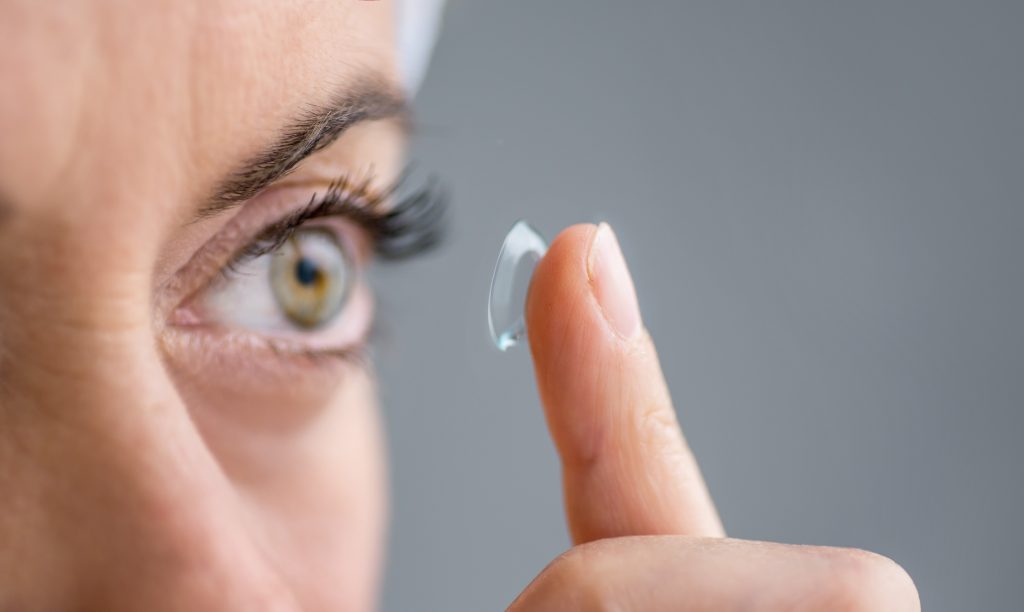
Multifocal contact lenses incorporate multiple focusing zones within a single lens. These zones allow the brain to select the appropriate focus depending on viewing distance, providing clearer vision at near, intermediate, and far ranges.
Suitable for
- Adults already comfortable wearing contact lenses
- Individuals with active lifestyles
- Those who prefer glasses-free vision
Monovision Contact Lenses
Monovision corrects one eye for distance and the other for near vision. The brain adapts to use each eye for different tasks.
Considerations
- Requires an adaptation period
- Not suitable for everyone
- May affect depth perception in some individuals
Contact lenses can be highly effective for managing presbyopia but require professional fitting and follow-up appointment to ensure comfort and proper visual balance.
Prescription Lens Customisation
Eye care professionals often tailor lens choices based on individual visual demands, including:
- Daily activities and occupational needs
- Duration of screen use
- Reading habits
- Lighting conditions at home or work
Understanding how presbyopia develops with age helps set realistic expectations and guide appropriate lens selection for optimal visual performance.
Eye Drops for Presbyopia
Some prescription eye drops are designed to temporarily improve near vision by altering pupil size or depth of focus. These drops do not reverse presbyopia and typically offer short-term effects.
Key points:
- Effects are temporary
- Not suitable for all patients
- May cause side effects such as headaches or dim vision
Eye drops may be helpful in specific situations but are generally not considered a primary long-term management solution.
Lifestyle and Visual Habit Adjustments
Non-surgical management of presbyopia also includes simple lifestyle and visual habit changes that reduce eye strain:
- Use adequate ambient or task lighting when reading or performing near tasks
- Hold reading materials at a comfortable distance
- Take regular breaks during prolonged near work
- Adjust screen brightness, contrast, and font size for easier viewing
These strategies complement optical aids and improve overall visual comfort during everyday activities such as reading,screen use, or hobbies.
Managing Progression Over Time
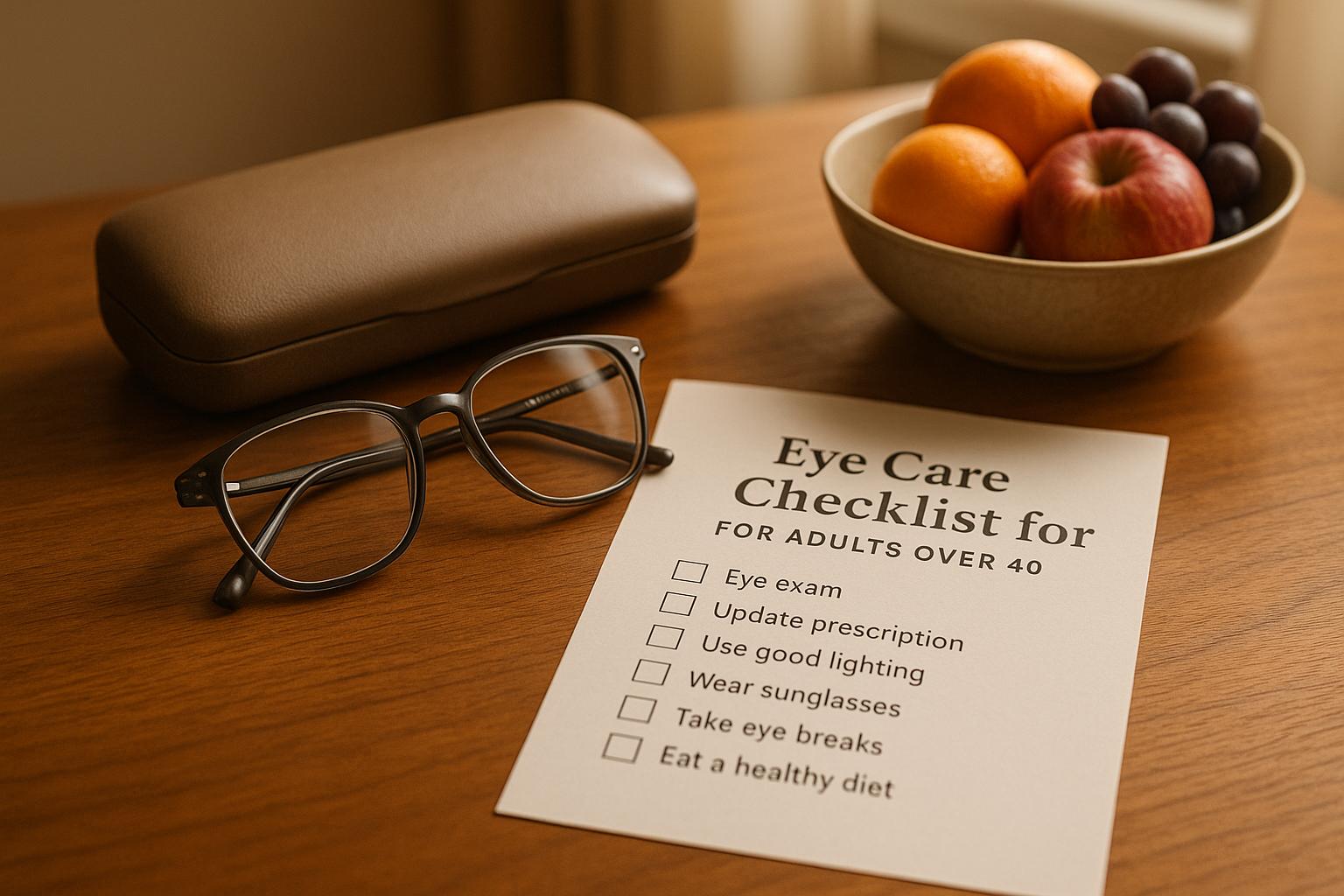
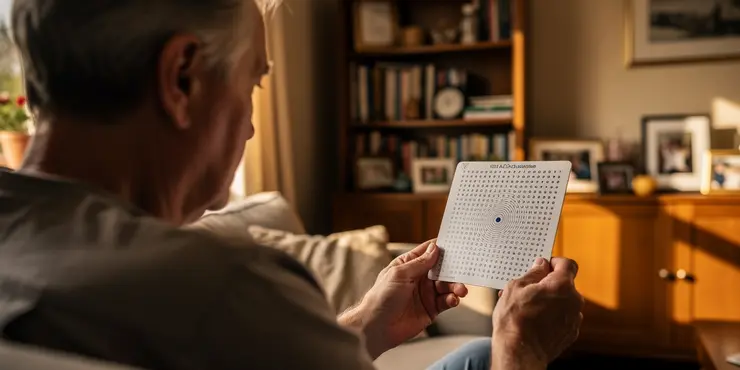
Presbyopia gradually progresses until around the early 60s, after which changes often stabilize. Non-surgical treatments can be updated periodically to match evolving visual needs.Regular eye examinations allow:
- Timely prescription updates
- Early detection of other age-related eye conditions
- Optimisation of overall visual comfort
Conclusion
Non-surgical treatments form the cornerstone of presbyopia management for most adults. Reading glasses, multifocal lenses, contact lenses, and lifestyle adjustments provide flexible and effective solutions for maintaining near vision. Combined with professional guidance and regular eye exams, these approaches allow adults can continue daily activities comfortably as presbyopia naturally progresses.