Amblyopia treatment is usually associated with glasses, patching, or atropine therapy. However, some children with amblyopia may also experience challenges related to visual coordination, daily activities, or functional visual skills. In certain situations, supportive therapies such as occupational therapy (OT) may become part of a broader rehabilitation approach.
Occupational therapy does not replace medical amblyopia treatment. Instead, it may help children improve how they use visual information during everyday activities such as reading, writing, coordination tasks, self-care, and school participation.
This article looks at how occupational therapy approaches may fit into amblyopia rehabilitation, what kinds of functional issues may benefit from additional support, and where occupational therapy plays a complementary rather than primary role. It also explains why the most effective approach is usually a collaborative one, with the child’s eye care team managing the amblyopia itself while occupational therapy focuses on how visual difficulties affect everyday function, learning, and participation.
Where Occupational Therapy Fits In
The main treatment of amblyopia still remains under the care of an ophthalmologist and, where available, an orthoptist or paediatric eye care team . Standard management aims to provide the weaker eye clearer with clearer visual input and reduce suppression by the stronger eye when appropriate . Depending on the individual child, treatment may include refractive correction with glasses, patching, atropine eye drops, or other evidence-based approaches .
Occupational therapy has a different role. Rather than treating the amblyopia itself, it focuses on how visual challenges affect a child’s ability to perform everyday activities, including :
- Reading and near work
- Visual attention during tasks
- Hand-eye coordination
- Fine motor performance
- School participation
- Daily routines and independence
That is why occupational therapy is best understood as a functional support approach, not as a replacement for amblyopia treatment itself.
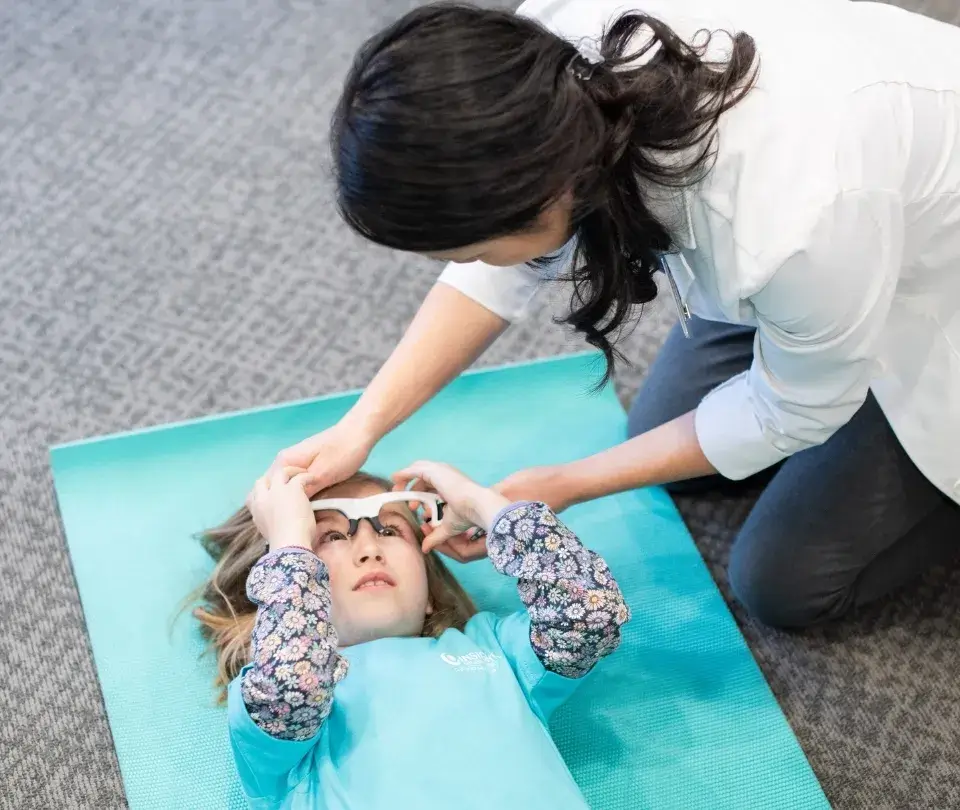
Why Some Children With Amblyopia May Need Extra Functional Support
A child with amblyopia may show improvement on a vision chart but still experience difficulties with certain everyday activities.
These challenges may include :
- Slower reading or losing their place on the page
- More effort during drawing or writing
- Hesitation when catching or throwing a ball
- Frustration during prolonged close-up schoolwork
- Reduced confidence in visually demanding tasks
Not every child with amblyopia experiences these difficulties, but when they do occur, a broader rehabilitation approach may help support participation both at school and at home.
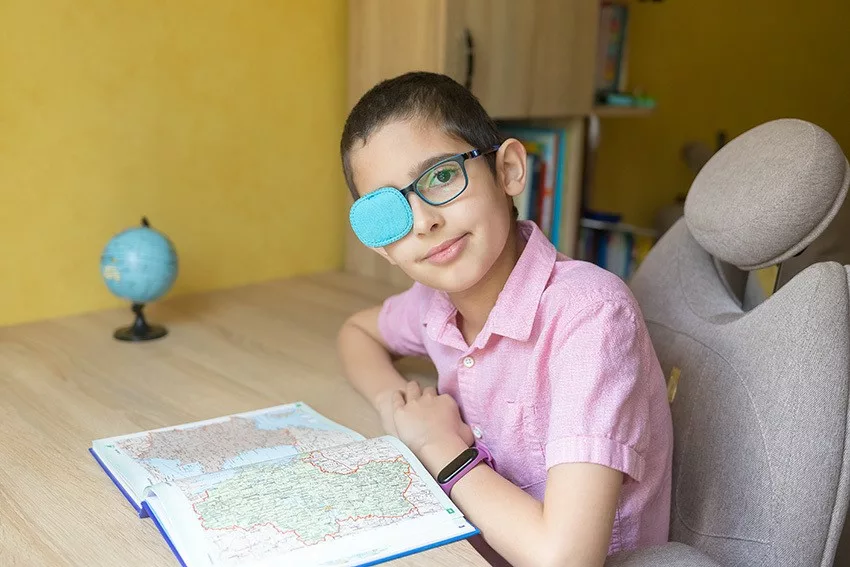
What Occupational Therapy Approaches May Focus On
When occupational therapy is involved, the emphasis is usually on functional vision and how the child uses visual information during everyday activities. That may include observing how visual skills interact with posture, movement, motor planning, attention, and task completion.
Possible therapy focuses may include:
- Visual attention during tasks
- Eye-hand coordination
- Visual-motor integration
- Fine motor skills used for reading or writing tasks
- Task adaptation in school or home routines
- Environmental adjustments to reduce visual demands where appropriate
The goal is to help children perform daily activities more effectively rather than to directly improve visual acuity.
Supporting School And Classroom Participation
One of the clearest areas where occupational therapy may help is school participation. Some children with amblyopia may tire more easily during prolonged near work, read more slowly, or feel less confident during visually demanding classroom tasks. In these situations, occupational therapy may help identify practical ways to make learning more comfortable while formal amblyopia treatment continues.
This may involve support with:
- Optimising workstation setup
- Managing task pacing
- Scheduling appropriate visual breaks
- Supporting handwriting or copying tasks
- Recommending suitable classroom seating
- Suggesting adapted materials when appropriate
The aim is not to lower academic expectations, but to reduce unnecessary visual strain and support more comfortable, consistent participation in learning.
Hand-Eye Coordination And Visual-Motor Function
Another area that may matter is visual-motor performance. Some children with amblyopia may experience difficulties with tasks that require accurate coordination between vision and movement. This can affect activities such as catching a ball, copying from the board, drawing, cutting with scissors, or completing certain school and play activities.
In practice, occupational therapy may help support:
- Motor planning during visually guided tasks
- Confidence when interacting with moving or stationary objects
- Graded practice for fine motor activities
- Breaking visually complex activities into smaller, more manageable steps
Although these interventions do not directly treat amblyopia directly, they may help the child function more effectively while vision treatment continues.
Eye Treatment vs Occupational Therapy Support
| Area | Main focus |
| Glasses, patching, atropine | Treat the amblyopia and improve the weaker eye’s visual development |
| Binocular or active vision therapy (where appropriate) | Improve binocular function, reduce suppression, and support visual function in selected patients |
| Occupational therapy | Support functional performance in reading, school tasks, coordination, fine motor skills, and daily routines |
Where Occupational Therapy Has Limits
It is important to keep expectations realistic. Occupational therapy is not the primary treatment for amblyopia, and should never replace proper ophthalmic care. . Children still require proper assessment and management with evidence-based treatments such as glasses, patching, atropine therapy, or other interventions recommended by their ophthalmologist.
Occupational therapy focuses on helping children manage the functional impact of visual difficulties rather than correcting the underlying visual impairment itself.
A Team-Based Rehabilitation Approach
The most effective rehabilitation approach is often a collaborative one. In this model :
- The eye specialist diagnoses and manages the amblyopia
- The orthoptist or paediatric eye care team monitors visual progress where available
- The occupational therapist supports daily function where needed
- Parents, caregivers, and teachers help reinforce treatment routines and practical strategies in daily life.
Working together allows both visual development and everyday functioning to be addressed more comprehensively.
When An Occupational Therapy Referral May Be Worth Considering
An occupational therapy referral may be more worth considering when a child with amblyopia is also showing:
- Persistent difficulty with school-based visual tasks
- Reduced confidence during fine motor activities
- Challenges with hand-eye coordination
- Frustration during reading, writing, or copying tasks
- Functional difficulty that seems greater than would be expected based on visual acuity alone
Not every child with amblyopia requires occupational therapy. However, some children may benefit when visual difficulties are clearly affecting participation in everyday activities despite appropriate medical management.
Conclusion
Occupational therapy may play a valuable supportive role in amblyopia rehabilitation by helping children develop functional visual skills, improve visual-motor integration, and participate more confidently in school and daily activities. While occupational therapy does not replace medical treatment for amblyopia, it can complement ophthalmic care by addressing the practical challenges that some children experience during visual development.
Children with amblyopia who continue to experience functional visual difficulties may benefit from assessment by an ophthalmologist. Doctors such as Dr. Koh Yi Ni, Consultant Ophthalmologist, assess children with amblyopia and other paediatric eye conditions, identify the underlying cause, and recommend individualised treatment plans. When appropriate, they may also advise a multidisciplinary approach involving occupational therapists, educators, and families to support both visual development and everyday function.