Many people associate dry eye disease with irritation or discomfort, but changes in vision can also be an important part of the condition. In some cases, patients notice that their vision becomes blurry at certain times of the day, improves after blinking, or changes during prolonged visual tasks.
This type of fluctuating vision is commonly linked to tear film instability, which plays a major role in maintaining clear and smooth vision.
This article explains how dry eye disease may cause blurred or fluctuating vision, why blinking can temporarily improve clarity, what symptom patterns may suggest, and how tear film stability supports clearer vision.
How the Tear Film Supports Clear Vision
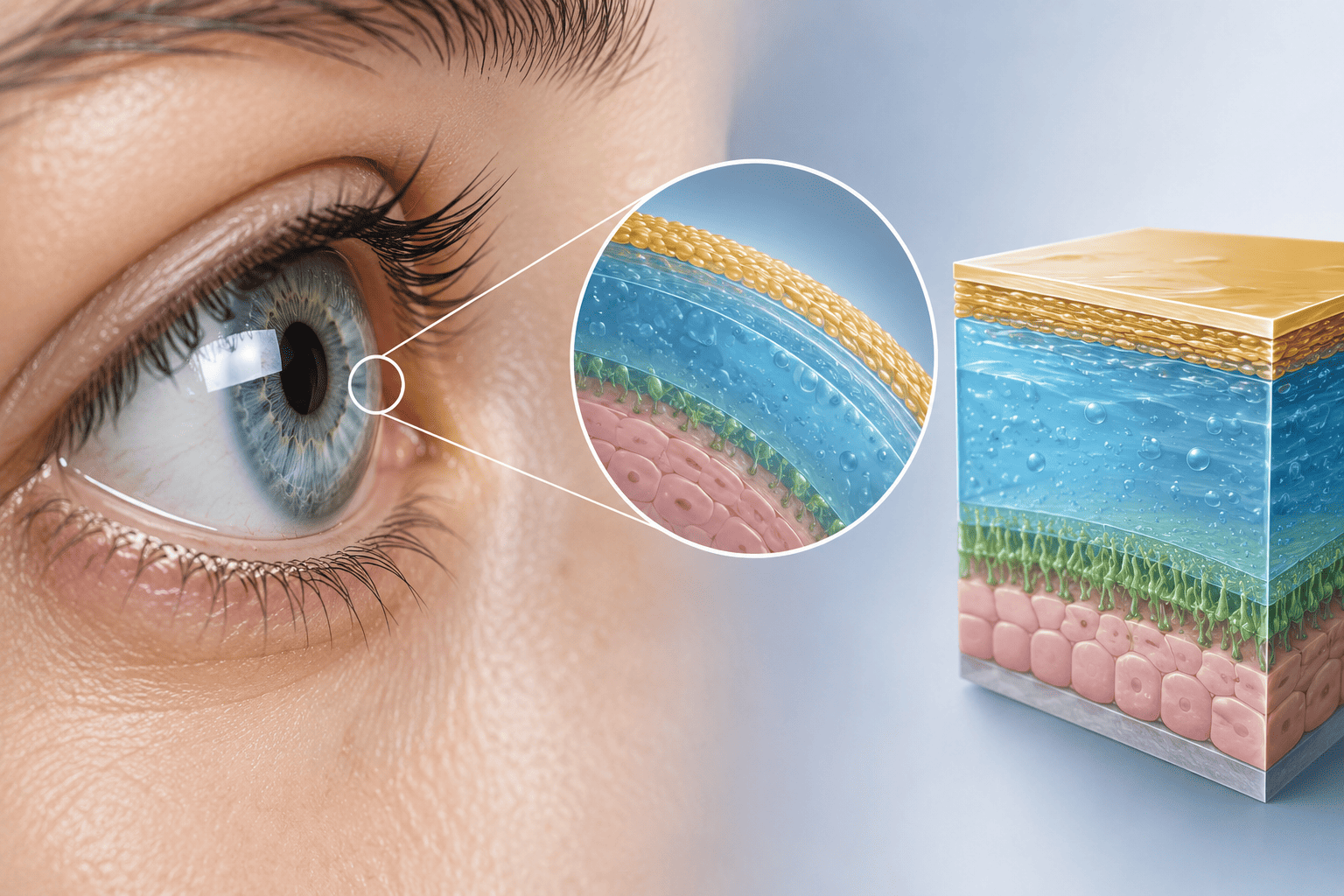
The tear film is a thin protective layer that covers the front surface of the eye. It helps keep the eye moist, smooth, and optically clear.
The tear film has three main layers:
Lipid layer, which helps reduce tear evaporation
Aqueous layer, which provides moisture
Mucin layer, which helps tears spread evenly across the ocular surface
When these layers do not work well together, the tear film may become unstable. This instability can disrupt the smooth optical surface of the eye and contribute to blurred or fluctuating vision in people with dry eye disease.

Why Dry Eye Disease Can Cause Blurred Vision
Dry eye disease can cause blurred vision when the tear film no longer stays smooth and stable across the eye surface. When it breaks up between blinks, the optical surface becomes uneven, which can affect visual clarity.
Patients may notice vision that appears:
Blurry
Hazy
Unstable
Inconsistent vision during reading or screen use
Blurred vision is common in dry eye disease. It can happen when the tear film does not remain stable enough to maintain a smooth optical surface between blinks.
Why Vision May Improve After Blinking
A common clue in dry eye-related blurred vision is that it may temporarily improve after blinking. Blinking spreads the tear film over the eye surface. For a short moment, the surface becomes smoother, and vision may clear.
However, if the tear film breaks up too quickly, the clarity may not last. After a few seconds, the vision may become blurry again until the patient blinks.
This pattern may suggest tear film instability:
Vision Pattern | What It May Suggest |
Vision clears briefly after blinking | The tear film is temporarily redistributed across the eye surface, creating a smoother optical surface |
Vision becomes blurry again after a few seconds | The tear film may be breaking up too quickly |
Blurring vision worsens during screen use | Reduced blinking may be making the tear film less stable |
Blurring worsens later in the day | Tear film stress may build up with prolonged visual tasks and environmental exposure |
Vision changes in air-conditioning or wind | Tears may evaporate |
This is why some patients feel their glasses prescription has changed, when the underlying issue may actually be the tear film instability.
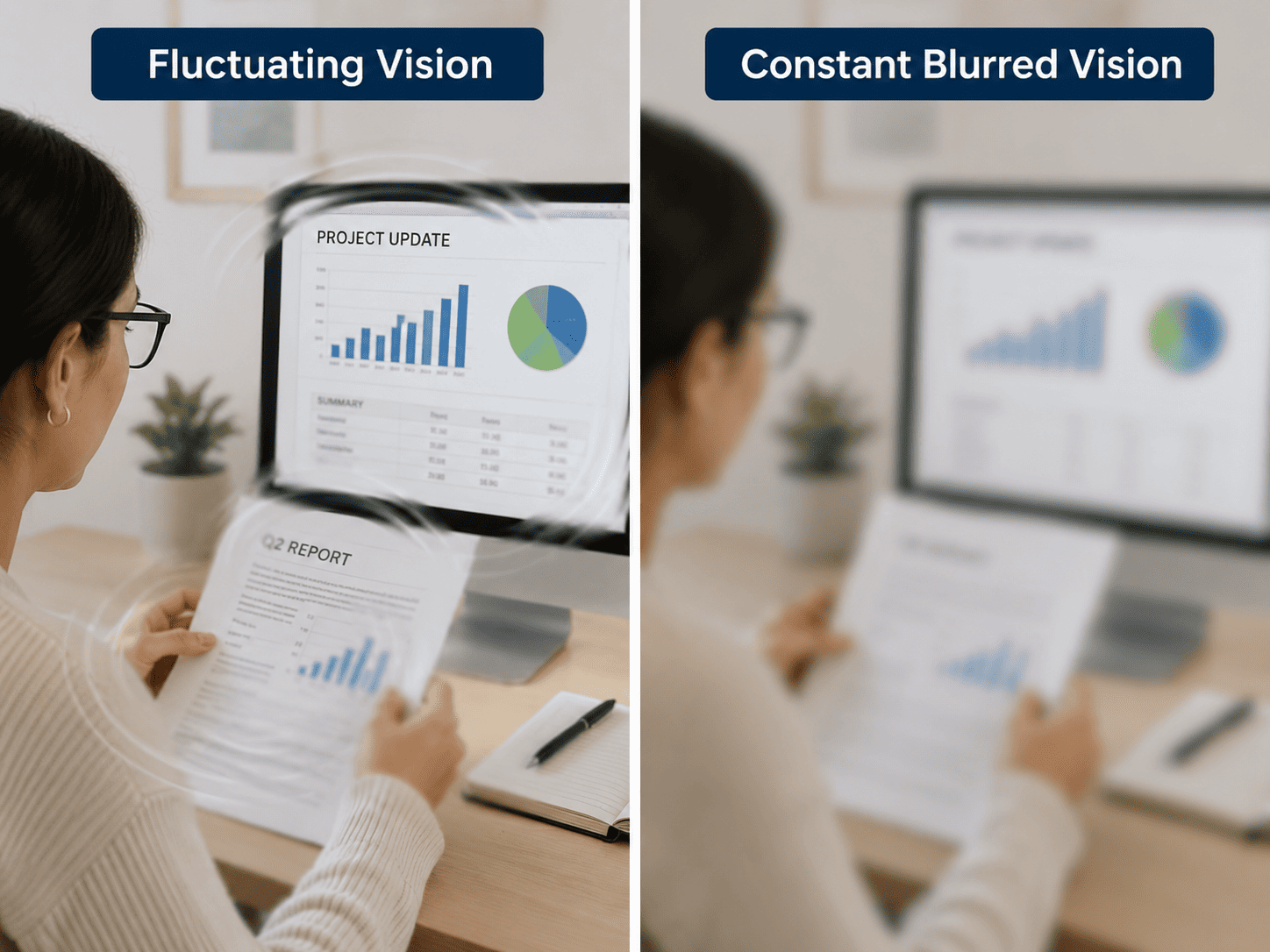
Fluctuating Vision vs Constant Blurred Vision
Fluctuating vision means vision clarity changes throughout the day or during certain activities. Constant blurred vision stays more consistently unclear.
Comparison Area | Fluctuating Vision in Dry Eye Disease | Constant Blurred Vision |
Pattern | Comes and goes throughout the day | Stays consistently unclear |
Common clue | May improve after blinking or lubricating drops | Not improve after blinking |
Common trigger | Screen use, reading, air-conditioning, wind, contact lens wear | May be linked to prescription changes, cataract, corneal issues, retinal problems, or other causes |
Daily pattern | May worsen later in the day | May remain consistently present regardless of activity or environment |
Tear film link | Often related to unstable tear film | May or may not be tear film-related |
This table is a general guide. Dry eye disease can contribute to blurred vision, but it is not the only possible cause. The pattern of symptoms and associated clinical findings help distinguish dry eye disease from other causes of blurred vision.
Why Screen Use Can Make Blurred Vision Worse
Many patients notice blurred or fluctuating vision during computer work, studying, or phone use. This is because people tend to blink less when focusing on screens. Reduced blinking means the tear film is not refreshed as frequently.
Under normal conditions, people usually blink about 15 to 20 times per minute. During prolonged digital screen or screen use, the blink rate may fall to about 5 to 7 times per minute. Screen use can also cause more incomplete blinks, which may increase tear evaporation and worsen dry eye symptoms.
When blinking decreases, the tear film may break up faster. The eye surface becomes less smooth, and vision may become unclear.
Patients may notice:
Vision becoming blurry after long screen sessions
Need to blink repeatedly to clear vision
Eye fatigue during computer work
Occasional difficulty reading small text
Dryness or burning after using a phone
Clearer vision after resting the eyes
This does not mean screens permanently damage the eyes. It means prolonged screen use and reduced blinking can worsen tear film instability and make symptoms more noticeable.
Why Blurred Vision May Worsen Later in the Day
Some patients find that their vision is clearer in the morning and more unstable later in the day. This may happen because the tear film has been subjected to hours of visual activity ,blinking, screen use, air-conditioning, wind exposure, and environmental stress.
As the day progresses, the eyes may become more irritated or less able to maintain stable lubrication. Patients with evaporative dry eye may notice these symptoms more in dry or air-conditioned environments because tears evaporate more quickly under these conditions.
Common late-day symptoms include:
Blurred vision during reading
Burning or stinging
Tired eyes
Heaviness around the eyelids
Difficulty concentrating
Increased need for lubricating drops
This pattern can be helpful because dry eye-related vision changes may be activity-dependent and environment-dependent.
Contact Lenses and Fluctuating Vision
Contact lens wear can make tear film instability more noticeable. Contact lenses sit on the tear film, so they depend on a stable tear layer for comfort and clear vision.
When the tear film is unstable, patients may experience:
Vision that changes while wearing contact lenses
Dryness after several hours of lens wear
Lens awareness or discomfort
Blurry vision that improves after blinking
Reduced wearing time
For some patients, the contact lens itself may further disrupt the tear film stability. In others, dry eye disease may already be present, with lens wear making the symptoms more obvious.
How Tear Film Stability May Be Managed
Management depends on the cause and severity of dry eye disease. The aim is to improve tear film stability, reduce irritation, and support a smoother eye surface.
Common approaches may include:
Lubricating Eye Drops
Artificial tears can help support the tear film and reduce friction on the eye surface. Patients who need drops frequently may benefit from discussing preservative-free lubricating eye drops with an eye care professional.
Screen Habit Adjustments
Patients who experience blurred vision during digital work may benefit from regular screen breaks, conscious blinking, and avoiding direct airflow from fans or air-conditioning.
Eyelid Care
If blurred vision is linked to meibomian gland dysfunction, eyelid hygiene and warm compresses may be recommended to support the oily layer of the tear film.
Environmental Adjustments
Reducing exposure to direct air-conditioning, wind, smoke, and dry indoor environments may help slow tear evaporation.
Clinical Treatment
Some patients may need prescription treatment or clinic-based care, especially if inflammation, significant tear deficiency, or eyelid gland dysfunction is present.
Conclusion
Dry eye disease can cause both blurred and fluctuating vision, especially when the tear film becomes unstable during daily visual activities. Because the tear film plays an important role in maintaining a smooth optical surface, even small disruptions can affect visual quality.
Recognising these symptom patterns can help patients understand when blurred or fluctuating vision may be linked to dry eye disease and when a professional assessment may be helpful.
Patients experiencing persistent blurred or fluctuating vision, particularly when symptoms improve after blinking or worsen during screen use, should undergo a comprehensive eye assessment with an ophthalmologist. Consultant Ophthalmologists such as Dr. Azhar Bin Zainuddin evaluate tear film stability, ocular surface health, eyelid gland function, and other possible causes of blurred vision to determine whether dry eye disease or another eye condition is contributing to the symptoms. Based on the findings, they provide personalised management plans to support clearer, more comfortable vision.