The surface of the eye depends on a stable and healthy tear film to stay comfortable, protected, and visually clear. Although tears are often associated only with moisture, the tear film actually plays an important role in maintaining overall ocular surface health.
When the tear film becomes unstable or disrupted, the surface of the eye can become irritated, inflamed, and more vulnerable to symptoms such as dryness, burning, blurred vision, and eye fatigue.
This article explains what the tear film is, how its different layers work, why it matters for ocular surface health, and what may happen when the tear film becomes disrupted.
What Is the Tear Film?
The tear film is a thin protective layer that covers the ocular surface, including the cornea and conjunctiva at the front of the eye. It helps keep the eye surface moist, smooth, and protected.
A healthy tear film supports several important functions:
Keeps the eye surface lubricated
Helps maintain clear vision
Reduces friction during blinking
Protects the eye from irritants
Supports healing and comfort
Helps maintain a stable ocular surface environment
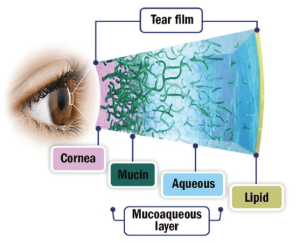
The Three Main Layers of the Tear Film
The tear film is commonly explained as having three main layers: the lipid layer, aqueous layer, and mucin layer. Each layer has a different role, but they work together as one protective system.
The Lipid Layer: Reducing Tear Evaporation
The lipid layer is the outer oily layer of the tear film. It is produced by the meibomian glands, which are small oil glands located along the eyelids.
Its main role is to slow down tear evaporation. This is especially important in environments where tears may dry out faster, such as air-conditioned rooms, windy outdoor areas, or places with dry indoor air.
When the lipid layer is unstable, tears may evaporate too quickly. This can expose the eye surface between blinks and lead to irritation.
Patients may notice:
Burning or stinging
Watery eyes caused by reflex tearing
Discomfort in air-conditioning
Fluctuating vision
Eyelid irritation
Symptoms that worsen later in the day
This is one reason meibomian gland dysfunction is commonly linked with evaporative dry eye.
The Aqueous Layer: Providing Moisture
The aqueous layer is the watery middle layer of the tear film. It provides moisture and helps keep the eye surface hydrated.
When the aqueous layer is insufficient, the eye surface may not receive enough moisture. This may contribute to aqueous-deficient dry eye, where tear production is reduced.
Patients with reduced tear volume may experience:
persistent dryness
tired eyes
grittiness
irritation
discomfort during reading or screen use
symptoms that feel worse in dry environments
The aqueous layer does more than simply “add water.” It helps maintain comfort and supports the health of the ocular surface.
The Mucin Layer: Helping Tears Spread Evenly
The mucin layer is the inner layer of the tear film. It helps tears spread smoothly and stay attached to the ocular surface.
Without a healthy mucin layer, tears may not coat the eye surface evenly. This can lead to dry spots, unstable vision, and irritation. Patients may feel as if the eyes are dry even if tears are present.
When the mucin layer is disrupted, patients may notice:
Patchy dryness
Gritty sensation
Blurred or fluctuating vision
Discomfort when blinking
Irritation that returns quickly after blinking
This layer is especially important because a smooth tear film helps create a smooth optical surface that allows light to pass through clearly.
How the Tear Film Supports Clear Vision
The tear film supports more than comfort. It also helps keep vision clear by creating a smooth optical surface. When the tear film stays stable, vision is clearer. When it breaks up too quickly, vision may fluctuate.
This is why some patients with dry eye disease notice that vision clears briefly after blinking, then becomes blurry again.
Vision Pattern | What It May Suggest |
Vision clears after blinking | Tears are temporarily spreading across the eye surface |
Vision blurs again quickly | The tear film may be breaking up too fast |
Vision worsens during screen use | Reduced blinking may be affecting tear film stability |
Vision worsens in air-conditioning | Tears may be evaporating more quickly |
Vision fluctuates later in the day | Tear film stress may build up over time |
This kind of visual fluctuation may be related to tear film instability, especially when it appears with burning, grittiness, or eye fatigue.
How Blinking Helps Maintain the Tear Film
Blinking is one of the simplest but most important ways the eye maintains the tear film. Every blink helps spread tears evenly across the eye surface. It also helps move oils from the meibomian glands into the tear film.
When blinking becomes less frequent or incomplete, the tear film may become unstable more quickly. This is common during screen use because people tend to blink less while focusing on digital devices.
Patients may notice symptoms during computer work, phone use, studying, reading, gaming, watching television, and long-distance driving. In these situations, the eye surface may not be refreshed regularly enough. Over time, this can lead to dryness, irritation, and blurred vision.
What Can Disrupt the Tear Film?
The tear film can be affected by many internal and external factors. Some are related to lifestyle, while others are linked to eyelid health, ageing, medical conditions, or use of certain medications.
Common factors include:
Prolonged screen use
Air-conditioning or direct airflow
Wind, smoke, or dust
Contact lens wear
Meibomian gland dysfunction
Eyelid inflammation or blepharitis
Age-related tear changes
Hormonal changes
For some patients, only one factor may be involved. For others, several factors may affect the tear film at the same time.
How Patients Can Support Tear Film Stability
Supporting tear film stability depends on the underlying cause, but several daily habits may help reduce stress on the ocular surface. Patients may consider:
Taking regular screen breaks
Blinking more consciously during screen use
Avoiding direct airflow from fans or air-conditioning
Using lubricating eye drops as advised
Keeping screens slightly below eye level
Maintaining eyelid hygiene if irritation is present
Reviewing contact lens wearing time if discomfort occurs
These steps may help improve comfort, though persistent symptoms may still require a more specific dry eye management plan based on clinical findings.
Conclusion
The tear film plays a vital role in maintaining ocular surface health, visual clarity, and everyday comfort. By keeping the eye surface stable and protected, it supports both healthy vision and normal eye function.
When the tear film becomes unstable, symptoms such as dryness, irritation, and fluctuating vision can develop. Understanding how the tear film works helps explain why maintaining tear film health is an important part of managing dry eye disease.
Patients experiencing persistent dryness, burning, fluctuating vision, or other symptoms that may be related to tear film instability should undergo a comprehensive eye assessment with an ophthalmologist. Senior Consultant Ophthalmologist, Dr. Adrian Chuah Khai Choon evaluates factors such as tear film stability, meibomian gland function, ocular surface health, and other potential causes of dry eye symptoms to determine the underlying condition and recommend an individualised management plan.