Many people with dry eye disease notice that their eyes feel more uncomfortable as the day goes on. Symptoms that seem mild in the morning may gradually become more noticeable by the afternoon or evening, especially after long hours of reading, screen use, or working in dry environments.
This pattern is common in dry eye disease and is closely related to how the tear film changes throughout the day.
This article explains why dry eye symptoms may worsen later in the day, how daily activities affect the tear film, what symptom patterns may indicate, and what patients can do to reduce late-day discomfort.
How the Tear Film Changes Throughout the Day
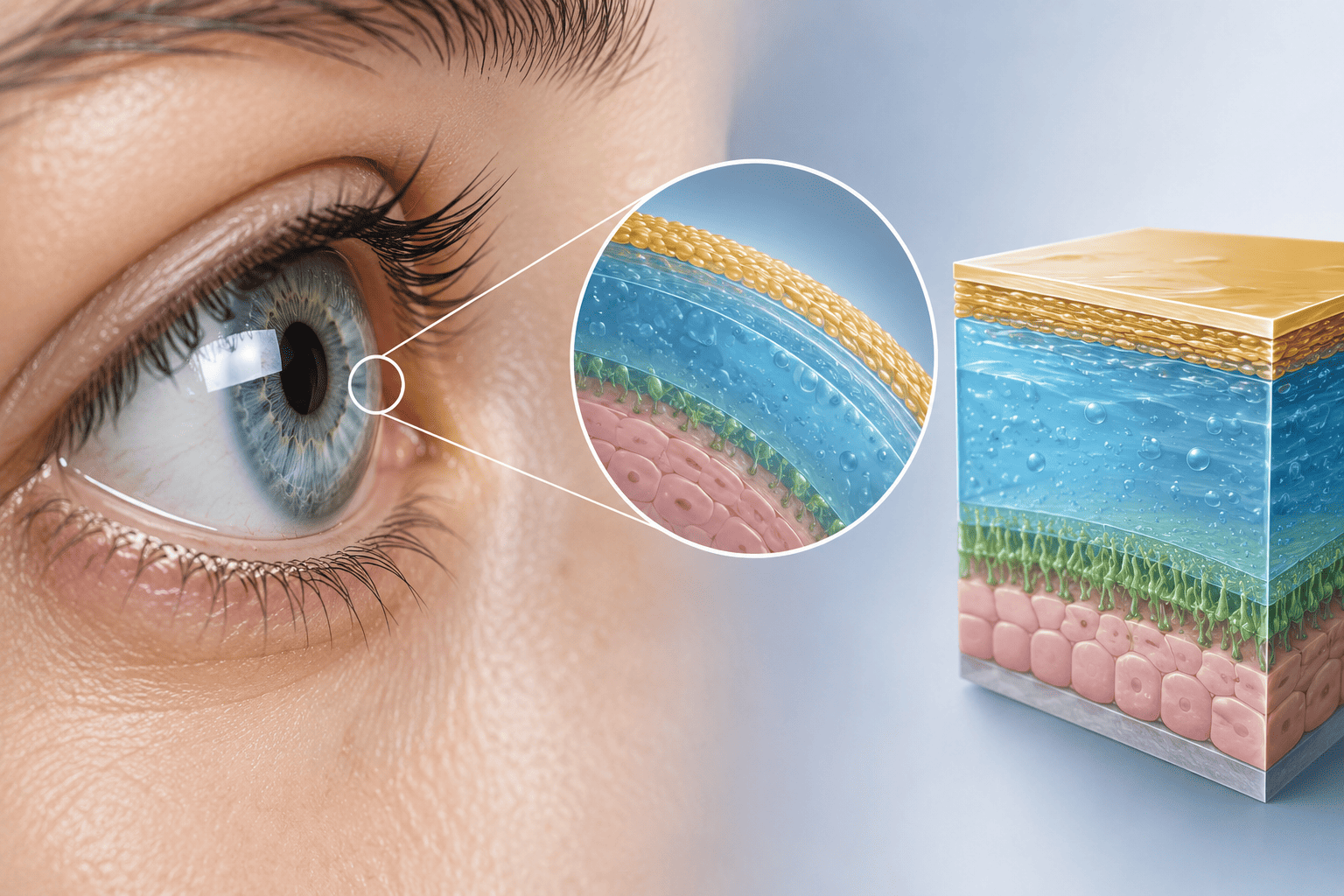
The tear film is the thin protective layer that covers the front surface of the eye. It helps keep the eye moist, smooth, and comfortable. It also supports clear vision by creating a stable optical surface.
A healthy tear film includes three main layers:
Lipid layer, which helps reduce tear evaporation
Aqueous layer, which provides moisture
Mucin layer, which helps tears spread evenly across the ocular surface
Throughout the day, this tear film is constantly being refreshed by blinking. However, when tear production is reduced, tears evaporate too quickly, or blinking becomes incomplete, the tear film may break up faster than usual.
As the day progresses, the eye surface may become more exposed. This can lead to burning, stinging, grittiness, watery eyes, eye fatigue, and fluctuating vision.
Why Symptoms May Feel Worse in the Afternoon or Evening
Late-day dry eye symptoms are usually related to accumulated stress on the eye surface. The eyes are exposed to many small triggers throughout the day. Individually, these triggers may seem minor. Together, they can make the tear film more unstable.
Common reasons include:
Reduced blinking during screen use
Prolonged in air-conditioning
Direct airflow from fans or car vents
Prolonged reading or near work
Contact lens wear
Dehydration or inadequate fluid intake
Smoke, dust, or outdoor wind exposure
Meibomian gland dysfunction (MGD)
By the end of the day, the eyes may have spent many hours trying to maintain comfort despite these triggers. This is why symptoms may feel stronger later, even if they were mild in the morning.
Screen Use and Reduced Blinking
Digital screen use is one of the most common reasons dry eye symptoms become more noticeable later in the day. When people focus on screens such as computers, phones, tablets, or televisions, they tend to blink less frequently or blink incompletely.
Blinking is important because it spreads fresh tears across the eye surface. When blinking decreases, the tear film may break up more quickly. Incomplete blinking can also prevent tears from spreading evenly.
This may lead to symptoms such as:
Dry or tired eyes after screen use
Burning after long screen sessions
Blurred vision that improves after blinking
Grittiness during reading or studying
Watery eyes from irritation
Difficulty concentrating in the evening
For patients with existing dry eye disease, screen use can make symptoms more obvious because the tear film is already unstable.
Air-Conditioning and Environmental Exposure
Air-conditioned spaces are common in daily life, but may worsen dry eye symptoms in some patients. Cool, dry airflow from air-conditioners, fans, or car vents can increase tear evaporation and disturb the tear film stability.
Patients may notice symptoms becoming worse:
after spending hours in air-conditioned rooms
while driving with air vents directed at the eyes
in windy, smoky, or dusty environments
in low-humidity indoor spaces
This is especially relevant in evaporative dry eyes, where tear film loses moisture too quickly because the tear film is less stable.
The Role of Meibomian Gland Dysfunction
Meibomian gland dysfunction is one of the common contributors to evaporative dry eye. The meibomian glands are located along the eyelids and produce the oil that forms the tear film’s lipid layer.
When these glands become blocked or produce poor-quality oil, the tear film may evaporate faster. Early in the day, symptoms may be mild. After hours of screen use, air-conditioning exposure, and less blinking, the tear film may become increasingly unstable.
This can cause:
Burning
Stinging
Eyelid discomfort
Blurred or fluctuating vision
Watery eyes
Contact lens discomfort
In this situation, lubricating eye drops may provide temporary relief , but eyelid health may also need attention.
Contact Lens Wear and Late-Day Dryness
Contact lens wearers may also notice that their lenses feel comfortable in the morning but dry or irritating by the evening. This happens because contact lenses sit on the tear film and can affect how tears spread across the eye surface.
Late-day contact lens discomfort may include:
Dryness after several hours of wear
Lens awareness
Blurry vision
Burning or stinging
Increased blinking
Shorter comfortable wearing time
This does not always mean contact lenses must be stopped completely. However, the type of lens, wearing duration, lens care routine, and dry eye condition may need to be reviewed.
Morning Symptoms vs Evening Symptoms
Dry eye symptoms can appear at different times of the day. The timing may provide useful clues about possible triggers.
When Symptoms Appear | Possible Reason |
Worse in the morning | Overnight dryness, eyelid inflammation, or poor tear distribution during sleep |
Worse during office hours | Screen use, reduced blinking, air-conditioning, or dry indoor air |
Worse in the evening | Build-up of tear film stress throughout the day |
Worse after driving | Air vents, reduced blinking, and visual focus |
Worse after contact lens wear | Tear film disruption over the lens surface |
This table is a general guide. Some patients may have more than one contributing factor.
Practical Ways to Reduce Late-Day Dry Eye Symptoms
Small daily adjustments may help reduce late-day dry eye discomfort by supporting the tear film and limiting common triggers. Patients may consider:
Taking regular screen breaks
Blinking more consciously during screen use
Avoiding direct air from fans or air-conditioning
Keeping screens slightly below eye level
Using lubricating eye drops as advised
Reviewing contact lens wearing time if symptoms occurs daily
These steps may help improve comfort, even though they do not address every cause of dry eye disease.
Conclusion
Dry eye symptoms often worsen later in the day because the tear film becomes more stressed after hours of visual activity and environmental exposure. Reduced blinking, tears evaporation, and prolonged screen use can all contribute to increasing discomfort over time.
Understanding this daily pattern can help patients recognise why symptoms fluctuate and what steps may help improve long-term eye comfort.
Patients who notice dry eye symptoms becoming progressively worse throughout the day, or who continue to experience discomfort despite self-care measures, should undergo a comprehensive eye assessment with an ophthalmologist. Senior Consultant Ophthalmologist Dr. Adrian Chuah Khai Choon evaluates factors such as tear film stability, meibomian gland function, ocular surface health, eyelid condition, and environmental or lifestyle contributors to determine the underlying cause of dry eye disease and recommend an individualised management plan.