Blepharitis and dry eye disease often occur together because both conditions affect the eyelids, tear film, and ocular surface. While blepharitis mainly involves inflammation of the eyelid margins, it can disrupt tear quality and contribute to dry eye symptoms over time. Many patients who seek treatment for dry eye are also found to have blepharitis or meibomian gland dysfunction (MGD).
This article explains the clinical relationship between blepharitis and dry eye disease, how eyelid inflammation can affect the tear film, what patients may notice, and why eyelid care may be part of long-term dry eye management.
What Is Blepharitis?
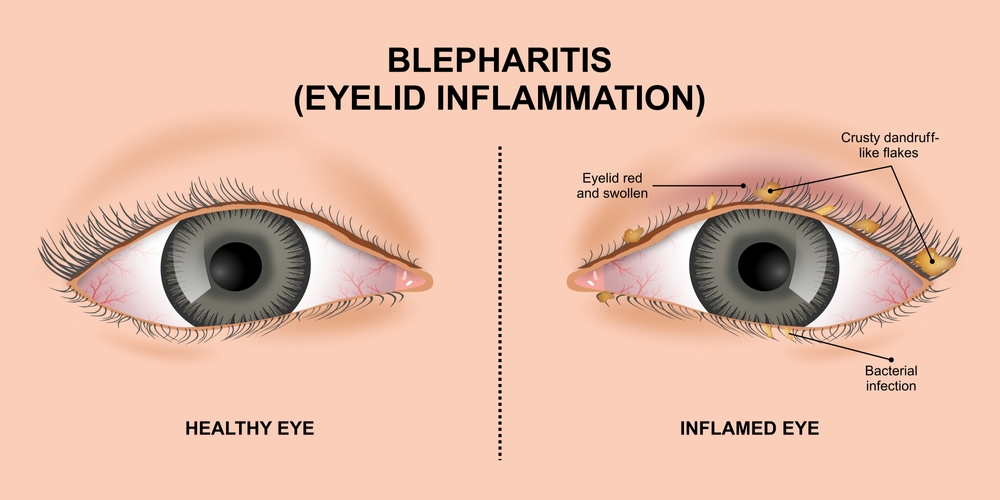
Blepharitis is inflammation of the eyelids, usually affecting the eyelid margins near the eyelashes. It can involve the front edge of the eyelid, the inner eyelid margin where the meibomian glands are located or both. Patients may notice irritation around the lids, flakes or crusting at the lash line, a greasy eyelid margin, swollen or itchy eyelids, or a gritty, sandy feeling in the eyes.
Although blepharitis is often thought of as an eyelid problem, it can also affect the tear film. When the eyelid margin remains inflamed, the quality of the tear film may become less stable, which can leave the eye surface more easily irritated and make dry eye symptoms more noticeable.
How Blepharitis Is Linked to Dry Eye Disease
The connection between blepharitis and dry eye disease often involves the tear film, which is the thin layer that keeps the front surface of the eye moist, smooth, and comfortable.
The eyelids help maintain this tear film with every blink. Along the eyelid margins are the meibomian glands, which produce the oil that forms the outer layer of the tear film. This oily layer helps slow tear evaporation.
When blepharitis affects the eyelid margins or the meibomian glands, the oil layer may become poor in quality or insufficient. As a result, tears may evaporate too quickly and become less stable on the eye surface. This is one reason blepharitis can contribute to evaporative dry eye.
Anterior and Posterior Blepharitis
Blepharitis is often described in two main forms: anterior blepharitis and posterior blepharitis. Understanding this difference helps explain why some patients have more lash-related symptoms, while others have more dry eye-related symptoms.
Type of Blepharitis | Area Affected | How It May Relate to Dry Eye |
Anterior blepharitis | Front eyelid margin near the eyelashes | May cause crusting, irritation, redness, and eyelid discomfort |
Posterior blepharitis | Inner eyelid margin and meibomian glands | May affect the oily layer of the tear film and increase tear evaporation |
The Role of Meibomian Gland Dysfunction
Meibomian gland dysfunction, or MGD, is one of the main reasons blepharitis and dry eye disease often overlap. The meibomian glands produce an oily substance that forms the outermost layer of the tear film. It helps stabilize the tear film and slow tear evaporation.
When these glands are blocked or not producing healthy oil, the tear film may evaporate more quickly and become less stable. As a result, patients may notice that symptoms worsen in air-conditioning, wind, or after long screen use. Vision may also fluctuate because the tear film is not staying smooth between blinks.
Symptoms Patients May Notice
Blepharitis and dry eye disease can create overlapping symptoms. This is one reason patients may not realise that eyelid inflammation is contributing to their dry eye discomfort.
Patients may notice:
Burning, stinging, or grittiness
Crusting or flakes around the eyelashes
Eyelid redness or irritation
Watery eyes from surface irritation
Blurred or fluctuating vision
Symptoms that feel worse in the morning or later in the day
These symptoms may vary depending on whether the main issue is eyelid margin inflammation, meibomian gland dysfunction, tear film instability, or a combination.
Why Symptoms May Become Chronic or Recurrent
Blepharitis can be long-term for some patients. Symptoms may improve with care and then return when eyelid hygiene is stopped or when triggers build up again. This is one reason blepharitis can contribute to recurring dry eye symptoms.
The eyelid margins are constantly exposed to oil, skin debris, bacteria, environmental particles, and inflammation. If this area remains irritated, the tear film may continue to be affected. In patients who already have dry eye disease, this can make symptoms more persistent and increase the need for ongoing management.
Why Eyelid Care Matters in Dry Eye Management
When blepharitis contributes to dry eye symptoms, lubricating eye drops alone may not fully address the problem. Although eye drops may improve comfort for a while, but they do not address inflammation or blockage of the eyelid margins and meibomian glands.
Eyelid care may help by reducing debris, supporting gland function, and improving the tear film environment. In some cases, additional treatment may also be needed depending on the severity and clinical findings.
Practical Eyelid Care Habits
Patients with blepharitis-related dry eye may benefit from consistent, gentle eyelid care. The aim is to support lid margin health without irritating the eyes further.
Helpful habits may include:
Cleaning the eyelid margins gently as advised
Using warm compresses when recommended
Avoiding harsh scrubbing around the eyelids
Removing debris around the lash line carefully
Avoiding eye rubbing
Following contact lens hygiene carefully if lenses are worn
Patients should avoid using strong soaps, random home remedies, or unsuitable products near the eyes. The eyelid margin is delicate, and irritation can worsen symptoms.
Conclusion
Blepharitis and dry eye disease are closely connected because eyelid inflammation can affect tear film stability and ocular surface comfort. When the lid margins or meibomian glands are not functioning well, dry eye symptoms may become more noticeable and persistent.
Understanding this relationship helps explain why managing eyelid health is often an important part of long-term dry eye disease care. Patients who continue to experience persistent symptoms despite regular eyelid care may benefit from a comprehensive eye assessment to identify underlying conditions such as blepharitis, meibomian gland dysfunction, or other ocular surface disorders.
Eye doctors such as Dr. Calvin Lim Chung Yee, Consultant Ophthalmologist, may evaluate eyelid health, tear film stability, and meibomian gland function as part of a comprehensive assessment to determine the underlying cause and recommend appropriate management.