The eyes rely on a healthy and stable tear film to remain comfortable, lubricated, and visually clear. Because tears contain a significant water component, it is reasonable to ask whether dehydration may affect the eyes and contribute to worsening dryness or irritation.
While dehydration is not considered as a primary cause of dry eye disease, it may contribute to tear film instability and make existing dry eye symptoms feel more noticeable in some people.
This article explains how dehydration may influence dry eye symptoms, how it relates to tear film stability, and why hydration should be viewed as part of a broader dry eye management approach.
How Hydration Relates to Dry Eye
Hydration is most closely related to the aqueous layer of the tear film, which is produced by the lacrimal glands. It can influence eye comfort, but it is only one part of the picture. Dry eye may happen when the eyes do not produce enough tears, when tears evaporate too quickly, or when the tear film does not function well enough to keep the eye surface comfortable.
Hydration is most relevant to the watery component of tears. If the body is not well-hydrated, some patients may notice that the eyes feel drier or less comfortable. This does not mean that drinking more water will cure dry eye disease, but poor hydration may make symptoms more noticeable.
Dehydration Is One Possible Contributor, Not the Whole Cause
Dry eye disease is usually multifactorial, which means several factors may contribute at the same time. A patient may have mild dehydration, but may also spend long hours on screens, sit in air-conditioning, wear contact lenses, or have meibomian gland dysfunction.
This is why hydration should be understood in context. Maintaining adequate hydration may support general eye comfort, but it may not fully address symptoms caused by tear evaporation, eyelid oil gland dysfunction, inflammation, or medication-related dryness.
How Dehydration May Affect Dry Eye Symptoms
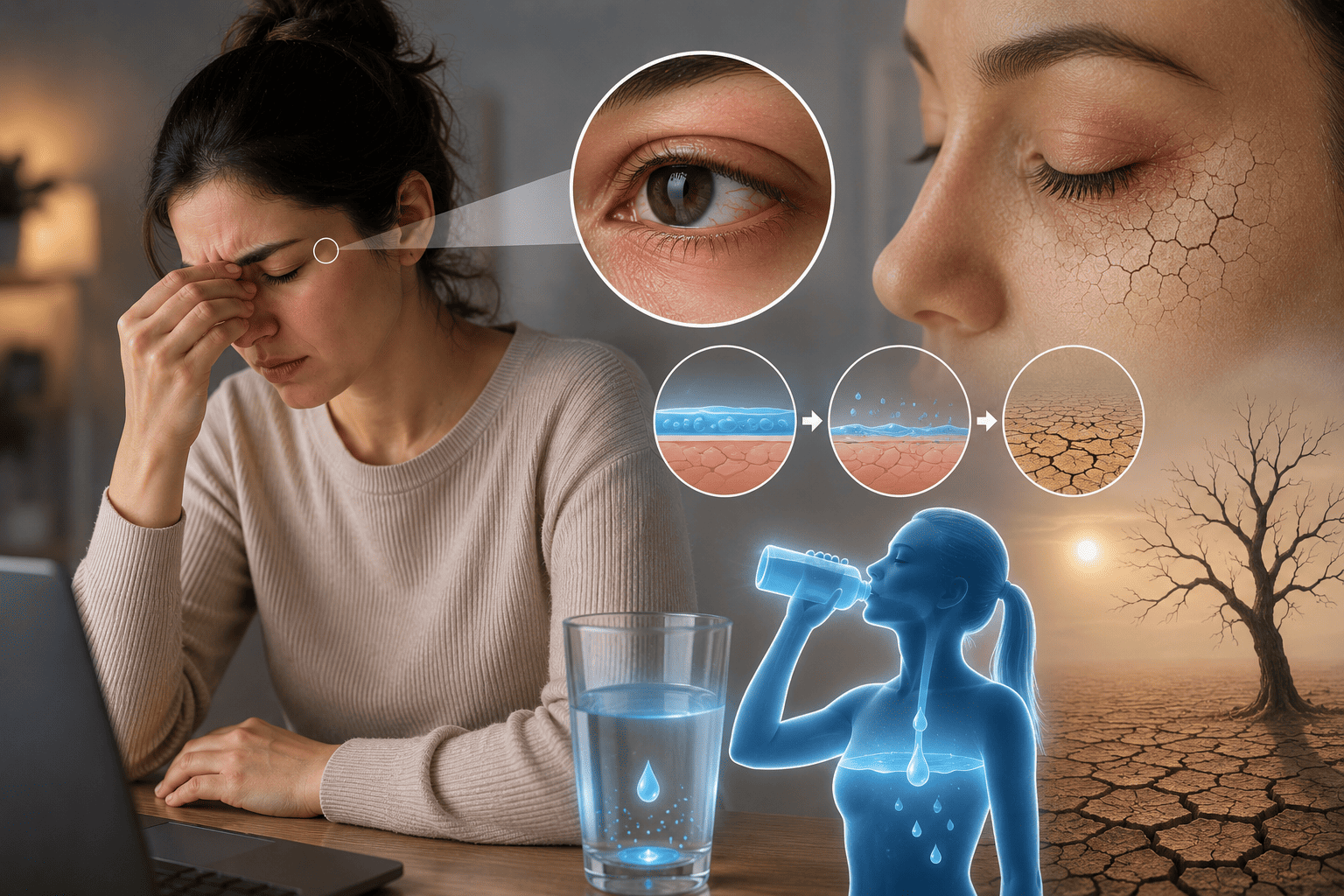
When the body has insufficient fluid, the eyes may feel more easily irritated. Patients who already have dry eye disease may notice symptoms becoming more obvious during hot weather, illness, sweating, travel, or inadequate fluid intake.
Dehydration may contribute to:
Increased dryness or grittiness
More discomfort during screen use
Reduced tolerance to air-conditioning or wind
More noticeable eye fatigue during the day
The key point is that dehydration may lower the eye’s comfort reserve. If the ocular surface is already under stress, even mild dehydration may make symptoms feel worse.
Dehydration and Other Daily Dry Eye Triggers
Dehydration can combine with other daily triggers. This is why symptoms may appear worse on certain days even when the dry eye condition itself has not dramatically changed.
Trigger Combination | How It May Affect Dry Eye Symptoms |
Dehydration + screen use | Reduced blinking and lower moisture support may increase irritation |
Dehydration + air-conditioning | Dry indoor air and reduced fluid intake may worsen dryness |
Dehydration + contact lens wear | Lenses may feel dry or uncomfortable sooner |
Dehydration + hot weather | Sweating and fluid loss may make symptoms more noticeable |
Dehydration + lack of sleep | Eye fatigue and dryness may feel worse together |
What the Research Suggests About Water Intake
Research into water intake and dry eye disease is still developing. Some studies suggest that lower water intake may be associated with a higher likelihood of dry eye, while others indicate that overall hydration may play a role in eye comfort.
These findings support a balanced view. Hydration may matter, but it should not be presented as a standalone solution. Dry eye disease can also involve tear evaporation, inflammation, eyelid gland dysfunction, medication effects, ageing, hormonal changes, and environmental triggers.
How to Recognise If Hydration May Be Contributing
Patients can look at daily patterns to see whether hydration might be one of the contributing factors.
Hydration may be relevant when symptoms feel worse:
After a day of low fluid intake
During hot weather or after sweating
During travel or long flights
After illness with fever, vomiting, or diarrhoea
When combined with long screen use or air-conditioning
When the mouth or skin also feels dry
These signs do not confirm that dehydration is the main cause. They only suggest that hydration may be part of the symptom pattern.

Can Drinking More Water Improve Dry Eye?
For some patients, improving hydration may reduce dryness or make the eyes feel more comfortable, especially if low fluid intake is contributing to symptoms. However, increasing water intake alone may not be enough if the main cause is meibomian gland dysfunction, eyelid inflammation, medication effects, or chronic tear film instability.
A practical approach is to treat hydration as one part of daily dry eye care. Patients may benefit from:
Drinking water regularly throughout the day
Increasing fluid intake during hot weather or exercise
Avoiding long periods without fluids during work or study
Being mindful of dehydration during illness or travel
Combining hydration with screen breaks and airflow control
This connects with broader daily habits that may aggravate dry eye disease, where hydration, screen habits, environment, and sleep can all influence symptom severity.
What Patients Can Observe
Patients can better understand the role of hydration by observing their daily symptom pattern. Useful questions include:
Do the eyes feel worse on days with low water intake?
Do symptoms increase during hot weather or after sweating?
Are symptoms worse during travel or long flights?
Do symptoms appear together with mouth dryness or general tiredness?
Do symptoms improve when hydration, screen breaks, and airflow control are improved together?
These observations can help patients understand whether dehydration may be contributing to symptom severity.
Conclusion
Dehydration may contribute to worsening dry eye symptoms by reducing overall ocular comfort and making existing tear film problems more noticeable. Although it is usually not the sole cause of dry eye disease, inadequate hydration may increase symptom severity, particularly when combined with prolonged screen use, environmental dryness, or pre-existing tear film instability.
Recognising the possible role of hydration can help patients understand that dry eye disease is often influenced by multiple factors. Maintaining adequate hydration, together with healthy visual habits and appropriate eye care, may support overall ocular comfort as part of a comprehensive dry eye management approach.
Persistent dry eye symptoms should not be attributed to dehydration alone. A comprehensive eye assessment can help determine whether tear film instability, meibomian gland dysfunction, ocular surface disease, or other contributing factors are involved.
Eye doctors such as Dr. Calvin Lim Chung Yee, Consultant Ophthalmologist, may assess the underlying causes of dry eye symptoms and recommend appropriate management based on each patient’s individual condition.