Dry eye disease is not always caused by the same underlying problem. In many cases, symptoms develop because the eyes either lose tears too quickly or do not produce enough tears to maintain a stable tear film. These two main patterns are known as evaporative dry eye and aqueous-deficient dry eye.
Understanding the difference between these types helps explain why symptoms may vary between patients and why treatment often needs to be tailored to the underlying cause.
This article explains the key differences between evaporative dry eye and aqueous-deficient dry eye, what symptoms patients may experience, and why identifying the type of dry eye matters.
What Is Dry Eye Disease?
Dry eye disease is a condition that affects the tear film and the ocular surface. The tear film is the thin protective layer that covers the front surface of the eye. It helps keep the eye moist, smooth, and comfortable while also supporting clear vision.
Dry eye disease may occur when there is an imbalance in tear film, with tear film instability, inflammation, ocular surface damage, and nerve-related changes contributing to symptoms.
This means dry eye disease can happen because:
Tears production is not enough
Tears evaporate too quickly
Poor quality or unstable tear film
Meibomian glands dysfunction
Inflammation of the eye surface
Abnormal blinking
For many patients, more than one factor is involved.
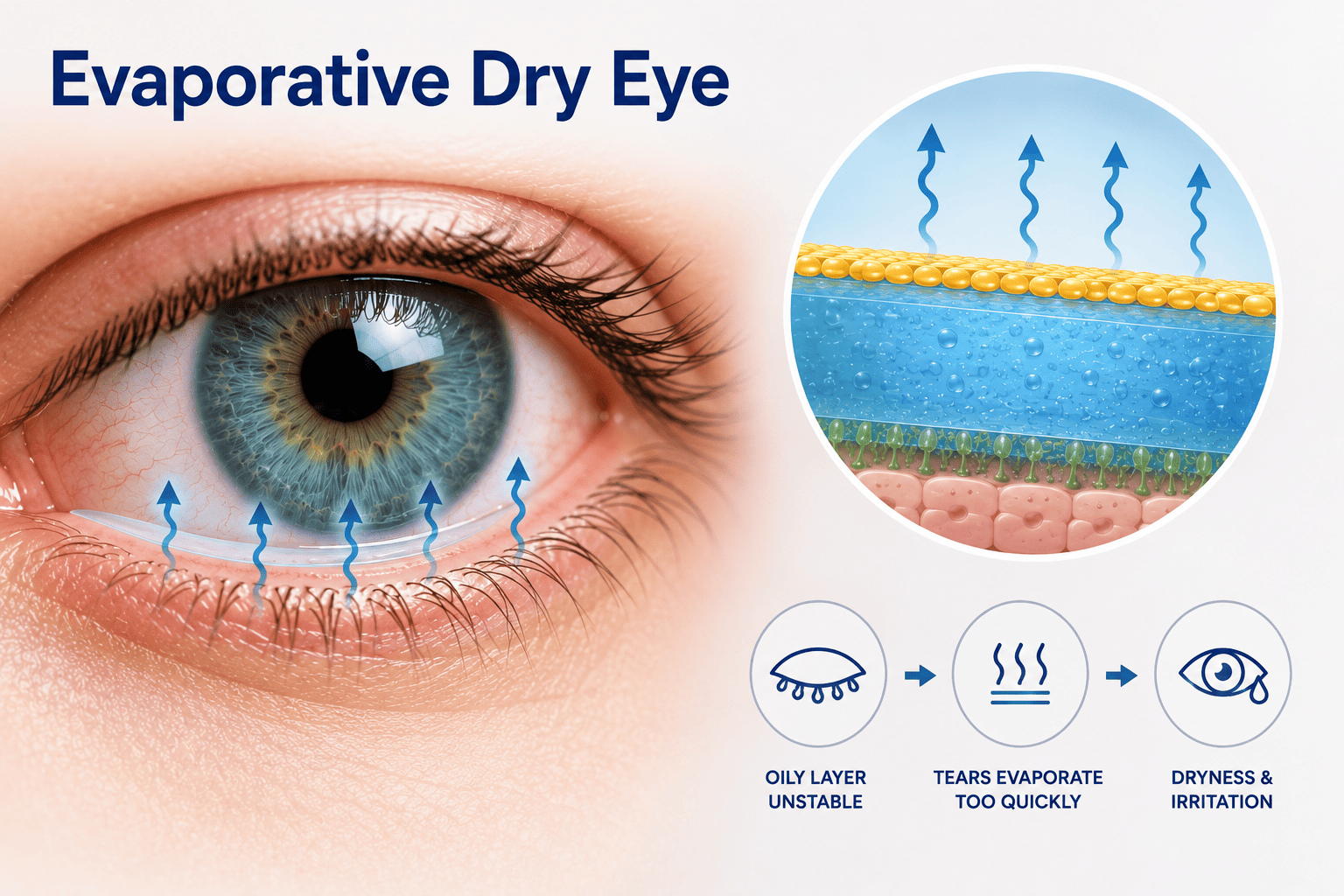
What Is Evaporative Dry Eye?
Evaporative dry eye happens when tears evaporate too quickly from the eye surface. This is commonly linked to problems with the lipid layer of the tear film, which depends on healthy meibomian gland function.
When the lipid (oil) layer is not stable, tears dry out faster and the eye surface becomes less protected between blinks. Symptoms may become more noticeable in air-conditioned rooms, windy or dry environments, prolonged screen use, or with contact lens wear.
This can lead to burning, stinging, watery eyes, and fluctuating vision.
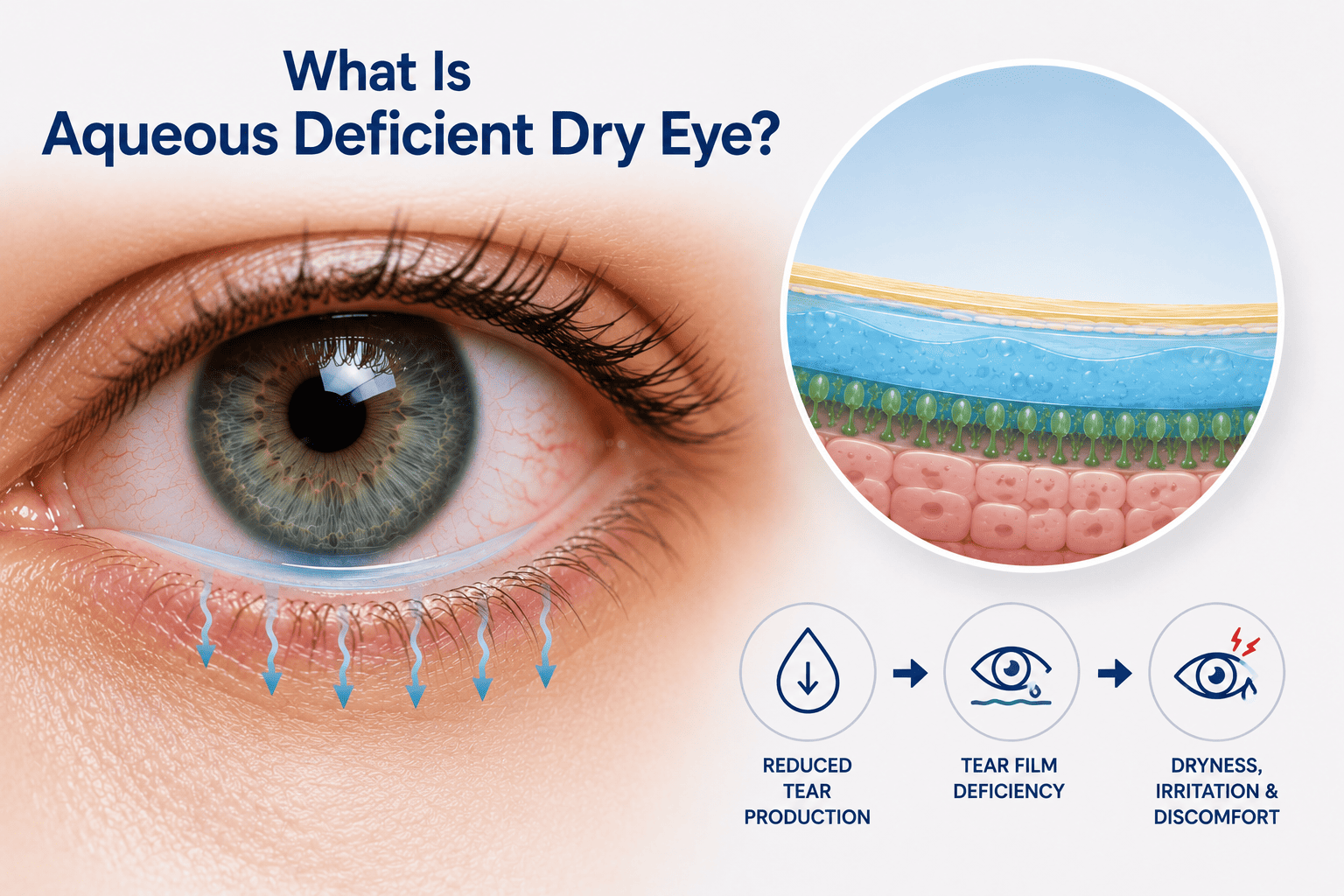
What Is Aqueous Deficient Dry Eye?
Aqueous deficient dry eye occurs when the eyes do not produce enough of the aqueous layer of tears, which is mainly produced by the lacrimal glands.
When tear volume is reduced, the ocular surface may not receive enough moisture and protection. Patients may notice persistent dryness, grittiness, tired eyes, or irritation during reading, screen use, or exposure to dry environments.
Common contributing factors include ageing, hormonal changes, certain medications, autoimmune conditions, reduced tear gland function, and previous eye procedures or surgery.
Evaporative Dry Eye vs Aqueous Deficient Dry Eye
Although both types can cause similar discomfort, the underlying issue is different.
Comparison Area | Evaporative Dry Eye | Aqueous Deficient Dry Eye |
Main problem | Tears evaporate too quickly | Tear production not enough |
Tear film layer involved | Mainly the lipid layer | Mainly the aqueous layer |
Common mechanism | Meibomian gland dysfunction | Lacrimal gland underproduction |
Common symptoms | Burning, stinging, watery eyes, fluctuating vision | Dryness, grittiness, tired eyes, irritation |
Common triggers | Screen use, air-conditioning, wind, contact lens wear | Ageing, systemic conditions, medications, hormonal changes |
Management focus | Support oil gland function and reduce evaporation | Support tear volume and address reduced tear production |
Can Patients Have Both Types?
Yes. Many patients do not fit neatly into one category, as dry eye disease can involve both evaporative and aqueous-deficient features.
For example, a patient may have reduced tear volume together with meibomian gland dysfunction, or may begin with one form and later develop additional ocular surface inflammation. This is why dry eye disease is best assessed based on symptoms, tear film stability, eyelid health, and ocular surface findings.
How Symptoms May Feel Similar
One reason dry eye disease can be confusing is that different types may cause similar symptoms. Whether tears evaporate too quickly or tear volume is reduced, the eye surface may still become irritated.
Patients may experience dryness, burning, stinging, grittiness, watery eyes, redness, blurred or fluctuating vision, sensitivity to light, contact lens intolerance , and eye fatigue during screen use.
Watery eyes can also occur in both types. This may happen when the eye surface becomes irritated and produces reflex tears. These reflex tears may overflow, but they may not provide stable lubrication.
Why Identifying the Type Matters
Identifying whether dry eye is mainly evaporative, aqueous deficient, or mixed is important because management should match the underlying cause.
For evaporative dry eye, management may focus on:
- Eyelid hygiene
- Warm compresses
- Treating meibomian gland dysfunction
- Reducing direct airflow
- Improving blinking during screen use
- Lubricating eye drops that support tear film stability
For aqueous deficient dry eye, management may focus on:
- Lubricating eye drops
- Preservative-free drops if frequent use is needed
- Addressing medication or health-related contributors
- Managing inflammation when present
- Considering treatments that support tear volume
Conclusion
Evaporative dry eye and aqueous deficient dry eye are two important types of dry eye disease. Evaporative dry eye happens when tears evaporate too quickly, often due to problems with the eyelid oil glands and the tear film’s lipid layer. Aqueous deficient dry eye happens when the eyes do not produce enough watery tears, often involving reduced lacrimal gland function.
Although the causes are different, both types can lead to dryness, burning, stinging, watery eyes, grittiness, eye fatigue, and fluctuating vision. Some patients may also have a mixed pattern, where both tear evaporation and reduced tear production are involved. Understanding these differences can help patients see why dry eye management is not always the same for everyone and why treatment should be guided by the underlying tear film problem.
Patients experiencing ongoing dry eye symptoms or fluctuating vision should undergo a comprehensive eye assessment with an ophthalmologist. Specialists such as Dr. Adrian Chuah Khai Choon, Senior Consultant Ophthalmologist, evaluate tear film stability, meibomian gland function, tear production, ocular surface health, and other contributing factors to determine whether dry eye disease is predominantly evaporative, aqueous-deficient, or mixed. This allows management to be tailored to the underlying cause and the patient’s individual symptoms.