By VISTA Eye Specialist Malaysia
Introduction to Age-Related Vision Loss
Around the age of 40, many Malaysians begin to notice difficulty focusing on nearby objects, a common age-related condition called presbyopia. While most people develop it gradually with age, some may experience an earlier onset, known as premature presbyopia, which can occur before age 40 and is often linked to underlying medical conditions. Though presbyopia is a natural part of aging and can’t be prevented, early detection and proper management can greatly improve quality of life.
Causes and Risk Factors
Presbyopia is primarily caused by the gradual thickening and loss of elasticity in the eye’s natural lens. As the lens becomes less flexible with age, it becomes more difficult for the eye to adjust focus for nearby objects.
While aging is the leading cause, several factors can increase the risk of developing presbyopia, including:
- A family history of presbyopia
- Chronic health conditions, such as high blood pressure or diabetes
- Exposure to certain medications that can affect focusing ability
While aging is the primary cause, a healthy lifestyle may help delay its onset or manage symptoms more comfortably.
Common Symptoms of Presbyopia
Presbyopia symptoms often develop gradually, typically becoming noticeable between the ages of 40 and 60 as part of the natural aging process. The most common sign is blurred vision when focusing on near objects, such as reading material, menus, or your phone screen.
Many people with presbyopia also experience eye strain or headaches after performing close-up tasks for extended periods, like reading, sewing or using digital devices. You might find yourself holding reading material at arm’s length to see it more clearly, or struggling with other close-up tasks that once felt effortless.
If you notice any of these symptoms, it’s essential to see an eye specialist for a proper evaluation.

Diagnosis and Eye Examination
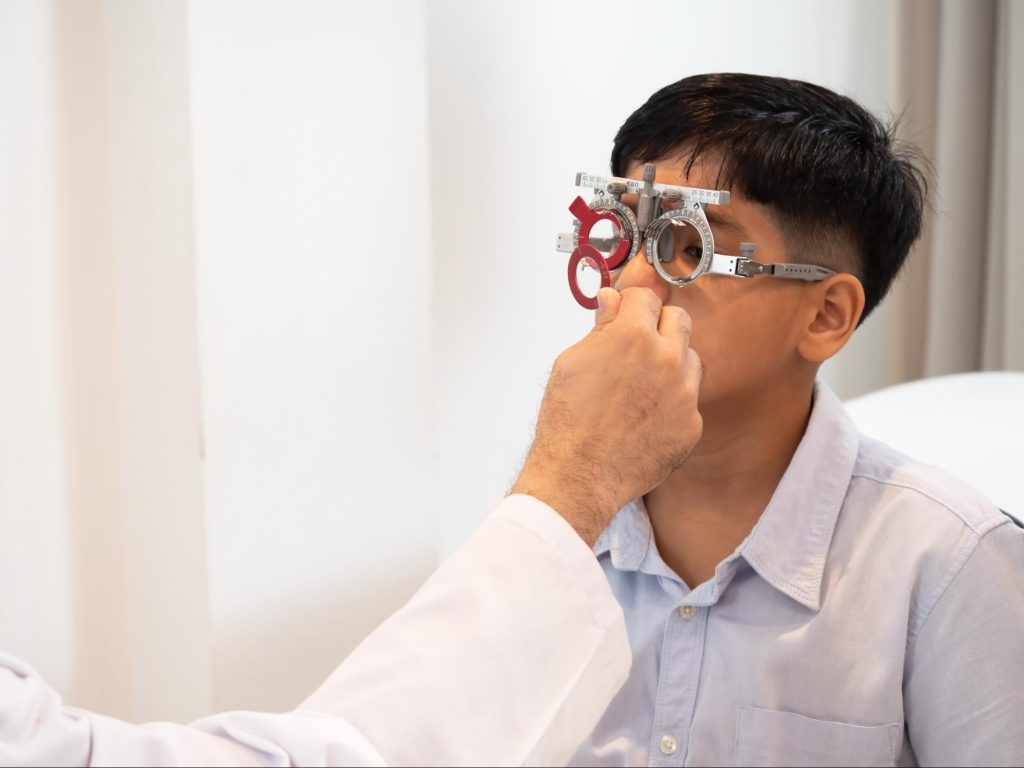
Diagnosing presbyopia involves a thorough evaluation by an eye specialist. The specialist will perform a comprehensive eye exam to assess your vision and overall eye health. This exam typically includes a refraction assessment, where different lenses are used to test how well you see at various distances, including near vision.
An eye health exam may also be performed, which involves using eye drops to dilate your pupils, allowing the eye specialist to examine the internal structures of your eyes more thoroughly.
The American Optometric Association recommends regular comprehensive eye exams for adults, especially if you have risk factors such as a family history of eye disease or are already wearing glasses or contact lenses. Similarly, the National Eye Institute advises individuals over 40 to schedule routine eye exams to detect early signs of presbyopia and other age-related vision changes. Regular check-ups are essential for maintaining eye health and ensuring that vision issues are identified and treated promptly.
Non-Surgical Corrective Lenses Options
Several non-surgical options are available to manage presbyopia effectively:
- Reading glasses: Ideal for individuals without distance vision problems. These are used specifically for close-up tasks like reading or using a smartphone.
- Prescription glasses with bifocal or progressive lenses:
-
- Bifocal lenses:It has two distinct zones for near and distance vision, but may offer a more limited visual range.
- Progressive (or multifocal) lenses provide a smooth transition between multiple distances, near, intermediate, and far, offering more natural vision correction.
3. Contact lenses:
Options for presbyopia include:
- Multifocal contact lenses, which provide clear vision at various distances.
- Monovision contact lenses, where one eye is corrected for distance and the other for near vision.
4. Over-the-counter reading glasses are a convenient option for mild presbyopia. However, they should be used after consulting an eye care professional to ensure they suit your vision needs.
Some people choose between eyeglasses or contact lenses based on lifestyle preferences, convenience, and comfort.
Surgical and Medical Treatment Options
For long-term correction, several advanced options are available::
- Lens replacement with Intraocular Lenses (IOLs): This involves replacing the eye’s natural lens with a synthetic one. It is most commonly done during cataract surgery, but can also be performed electively in a procedure called Refractive Lens Exchange (RLE) for patients without cataracts. Special IOL designs, such as multifocal or accommodative lenses, can improve both near and distance vision.
- Presbyopia surgery: Advanced options include corneal inlay implantation, a minimally invasive procedure where a device like the KAMRA Inlay is placed in one eye to enhance near vision.
- Eye drops: Some prescription eye drops may temporarily improve near vision. However, they may not be suitable for everyone and should only be used under the guidance of a certified eye specialist.
Each option has its benefits and limitations. A consultation with an experienced eye specialist can help determine the most suitable treatment based on your vision goals, eye health, and lifestyle needs.
Healthy Lifestyle Tips for Managing Presbyopia
While presbyopia is a natural part of aging and cannot be prevented, certain lifestyle changes can help manage its symptoms and support long-term eye health. Wearing protective eyewear, such as sunglasses with UV protection, can reduce eye strain and shield your eyes from harmful UV rays.
Managing chronic health conditions like diabetes or high blood pressure may also slow the progression of presbyopia. Reading glasses or contact lenses, whether prescription or over-the-counter, can improve near vision and make daily tasks like reading or using your phone more comfortable.
Additionally, maintaining a nutrient-rich diet that supports eye health, especially foods high in vitamins A, C, and E, omega-3 fatty acids, and lutein, can be beneficial.
Adopting healthy habits such as avoiding smoking, staying physically active, and limiting screen time can further support your vision and overall well-being as you age. Most importantly, schedule regular comprehensive eye exams to detect early signs of presbyopia and other vision changes.
Final Thoughts
Presbyopia is a natural part of aging, but that doesn’t mean you have to live with poor near vision. Whether through glasses, contact lenses, or surgical solutions, many options are available to restore clarity and comfort. The key is early diagnosis, informed decisions, and ongoing care from a qualified eye specialist.
Disclaimer: This article is for informational purposes only and is not a substitute for professional medical advice. Please consult a qualified eye care professional for personalized diagnosis and treatment options.