The eyes rely on a stable tear film to stay comfortable, protected, and visually clear. The meibomian glands play an important role by producing the oily part of the tear film, which helps slow tear evaporation. When these glands do not function properly, the tear film can become unstable and dry eye symptoms may develop.
This condition is known as meibomian gland dysfunction (MGD), and it is considered one of the most common contributors to dry eye disease, especially the evaporative type.
This article explains what the meibomian glands do, how meibomian gland dysfunction affects the tear film, what symptoms patients may notice, and how MGD may be managed as part of dry eye care.
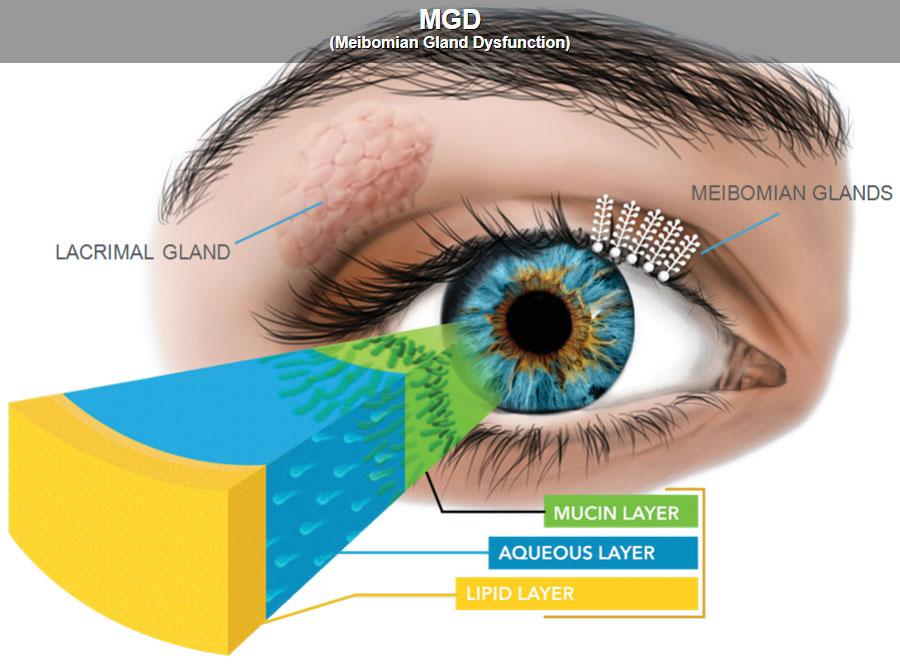
What Are the Meibomian Glands?
The meibomian glands are small oil-producing glands locatedalong the edges of the upper and lower eyelids. These glands produce an oily substance called meibum, which forms the outer oily layer of the tear film.
This oily layer is known as the lipid layer. Its main role is to slow down tear evaporation. When the lipid layer is healthy, tears remain on the eye surface longer, helping the eyes stay moist and comfortable between blinks.
What Is Meibomian Gland Dysfunction?
Meibomian gland dysfunction happens when the meibomian glands do not release enough healthy oil into the tear film. In many cases, the glands become blocked. In other cases, the oil may become too thick or poor in quality.
When this happens, the tear film loses part of its protective oily layer. As a result, tears may evaporate faster than normal. The eye surface may then become exposed between blinks, leading to irritation and dry eye symptoms.
How MGD Contributes to Dry Eye Disease
MGD is closely linked to evaporative dry eye. In evaporative dry eye, the eyes may produce tears, but the tears do not stay on the eye surface long enough because they evaporate too quickly.
This can create a cycle:
- The meibomian glands do not release enough healthy oil.
- The lipid layer becomes unstable.
- Tears evaporate too quickly.
- The eye surface becomes exposed and irritated.
- Inflammation may worsen tear film instability.
- Symptoms become more frequent or persistent.
Symptoms Patients May Notice With MGD
MGD symptoms can feel very similar to general dry eye symptoms. Some patients may not realise the eyelids are involved because the main discomfort is felt on the eye surface.
Common symptoms may include:
Burning or stinging
Gritty or sandy sensation
Dryness
Watery eyes
Blurred or fluctuating vision
Redness or irritation
Heavy or tired eyes
Eyelid discomfort
Contact lens discomfort
Symptoms that worsen in air-conditioning, wind, or after screen use
Some patients may also notice crusting around the eyelids, oily eyelid margins, or eyelid irritation. These signs may overlap with blepharitis, which can occur together with MGD.
Why Watery Eyes Can Happen With MGD
Watery eyes may seem confusing when the underlying issue is dry eye. However, MGD can cause the tear film to evaporate too quickly. When the eye surface becomes irritated, the eyes may respond by producing extra watery tears.
These are known as reflex tears. They may overflow, but they may not contain enough stable oil to protect the eye surface for long. This is why a patient can have watery eyes and still have dry eye disease.
Why MGD Symptoms May Worsen Later in the Day
Patients with MGD may feel more comfortable in the morning but notice more symptoms later in the day, as the tear film is exposed to repeated stress over time.
Common triggers include:
Prolonged screen use
Reduced blinking
Air-conditioning or direct fan exposure
Dry indoor air
Wind, smoke, or dust
Contact lens wear
Long periods of reading or driving
As the day goes on, poor oil spread across the tear film can increase evaporation and leave the eye surface more irritated, leading to burning, grittiness, watery eyes, or fluctuating vision.
MGD vs Aqueous Deficient Dry Eye
MGD is mainly associated with evaporative dry eye, but dry eye disease can also occur when tear production is reduced. This is known as aqueous deficient dry eye.
Comparison Area | MGD-Related Evaporative Dry Eye | Aqueous Deficient Dry Eye |
Main issue | Tears evaporate too quickly | The eyes do not produce enough watery tears |
Main tear film layer involved | Lipid layer | Aqueous layer |
Common mechanism | Meibomian glands are blocked or produce poor-quality oil | Lacrimal glands produce insufficient watery tears |
Common symptoms | Burning, watery eyes, eyelid irritation, fluctuating vision | Persistent dryness, grittiness, tired eyes |
Common triggers | Air-conditioning, wind, screen use, contact lens wear | Ageing, hormonal changes, autoimmune conditions, medications |
Management focus | Improving eyelid oil gland function and tear stability | Supporting tear volume and managing underlying contributors |
Some patients may have both types at the same time. This is why dry eye symptoms should be understood as part of a wider tear film and ocular surface picture.
What May Increase the Risk of MGD?
MGD can develop due to several factors related to age, eyelid health, lifestyle, and environment. Possible contributors include:
Ageing
Chronic eyelid inflammation
Blepharitis
Rosacea or oily skin conditions
Long hours of screen use
Incomplete blinking
Prolonged contact lens wear
Poor eyelid hygiene
Frequent exposure to air-conditioning or dry environments
Certain medications or health conditions
These factors can affect how well the meibomian glands function and how stable the tear film remains.
How MGD May Be Assessed
In clinical practice, an eye care professional may examine the eyelids, tear film, and ocular surface to see whether symptoms are linked to MGD, reduced tear production, inflammation, or a mixed dry eye pattern.
Assessment may include checking:
Eyelid margin health
Meibomian gland openings
Quality of oil expressed from the glands
Tear film stability
Tear breakup time
Ocular surface staining
Signs of blepharitis or inflammation
Blink pattern and completeness
These findings help guide the management plan and identify which aspect of the tear film needs the most support.
How MGD May Be Managed
Management depends on severity and clinical findings. The goal is usually to improve meibomian gland function, support the lipid layer, reduce tear evaporation, and calm ocular surface irritation.
Common management approaches may include:
Eyelid Hygiene
Eyelid hygiene helps remove debris, oil buildup, and irritants around the eyelid margin. This may be helpful when MGD occurs together with blepharitis or eyelid inflammation.
Warm Compresses
Warm compresses may help soften thickened oil within the meibomian glands. When done correctly and consistently, this may support better oil flow into the tear film.
Lubricating Eye Drops
Artificial tears may help reduce friction and improve comfort. Some patients may benefit from lubricating drops designed to support tear film stability. If drops are used frequently, preservative-free options may be considered.
Screen and Blinking Adjustments
Patients who use screens for long hours may benefit from regular screen breaks and conscious blinking. Complete blinking helps spread oils across the tear film more effectively.
Environmental Adjustments
Reducing direct airflow from fans, air-conditioning, and car vents may help reduce tear evaporation. Patients may also benefit from avoiding smoky or dusty environments when possible.
Clinical Treatment
Some patients may require prescription treatment or clinic-based therapies, especially when MGD is persistent, moderate to severe, or associated with inflammation.
Conclusion
Meibomian gland dysfunction (MGD) plays a major role in dry eye disease, particularly the evaporative type. By affecting the oily layer of the tear film, MGD can lead to faster tear evaporation, irritation, fluctuating vision, and eye discomfort.
Understanding how the meibomian glands function helps explain why eyelid health and tear film stability are important parts of dry eye management.
Patients experiencing persistent dry eye symptoms, fluctuating vision, or eyelid discomfort should undergo a comprehensive eye assessment with an ophthalmologist. Eye doctors such as Dr. Adrian Chuah Khai Choon, Senior Consultant Ophthalmologist, evaluate important factors including meibomian gland function, tear film stability, ocular surface health, eyelid condition, and other possible contributors to dry eye disease. Based on the findings, they provide personalised advice and management to help improve tear film stability, relieve symptoms, and support long-term ocular surface health.