Watery eyes are usually associated with having too many tears, which is why many people are surprised to learn that excessive tearing can still happen in dry eye disease. In reality, tearing does not always mean the eyes are well-lubricated. In some cases, it may actually be a response to irritation caused by an unstable tear film.
This article explains why watery eyes can happen in dry eye disease, how reflex tearing works, and what symptoms may appear together.
Why Can Dry Eyes Become Watery?
Watery eyes in dry eye disease usually happen because the surface of the eye becomes irritated. When the eye detects dryness, friction, or inflammation, it may respond by producing extra tears known as reflex tears.
Reflex tears are different from the balanced tears needed for daily eye comfort. Although reflex tears may be produced in large amounts , they do not remain on the eye surface long enough to provide the balanced tear film needed for lasting lubrication. This is why a patient can have watery eyes and still feel dryness, burning, or grittiness.
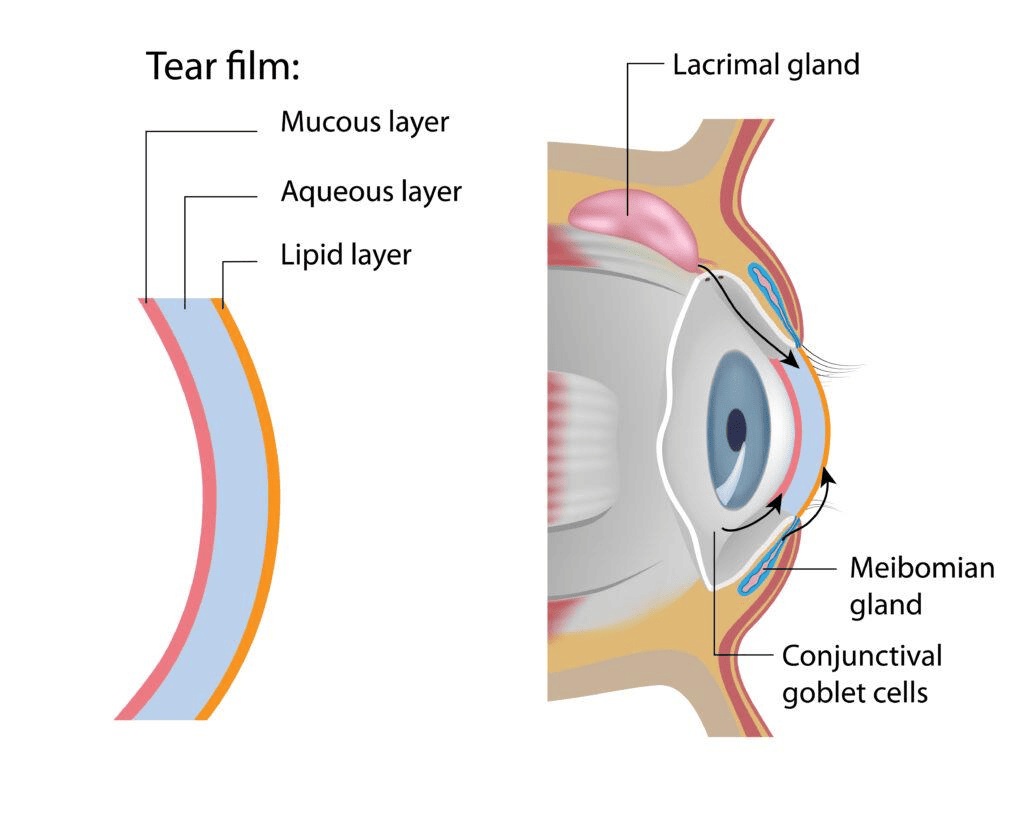
Understanding the Role of the Tear Film
The tear film is the thin protective layer that covers the front surface of the eye. It helps keep the eye moist, smooth, and visually clear. A healthy tear film depends on three main layers:
Lipid layer: the oily outer layer that slows tear evaporation
Aqueous layer: the watery middle layer that provides moisture
Mucin layer: the inner layer that helps tears spread evenly across the eye surface
When any of these layers is disrupted, the tear film may break up too quickly. The eye surface then becomes exposed between blinks, causing irritation. In response, the eye may produce more watery reflex tears.
This is why excessive tearing does not necessarily mean the eye is adequately lubricated. It may mean the eye is trying to compensate for an unstable tear film.
What Reflex Tears Are Different From Normal Tears
Comparison Area | Healthy Lubricating Tears | Reflex Tears |
Main purpose | Keeps the eye surface moist and stable throughout the day | Responds quickly to irritation, dryness, wind, or foreign particles |
Tear quality | Balanced tear film with lipid, aqueous, and mucin components | Primarily watery and less effective at maintaining a stable tear film |
Effect on comfort | Supports smooth blinking and clear vision | May overflow without giving lasting comfort |
Common pattern | Usually unnoticed during normal eye function | Eyes may water suddenly or repeatedly |
Link to dry eye | Helps prevent dryness when stable | May appear when dry eye irritation triggers tearing |
This difference is important because patients may think watery eyes mean they do not have dry eye disease. In reality, watery eyes may be a sign that the eye surface is irritated and struggling to maintain stable lubrication.
Common Symptoms That May Appear With Watery Eyes
When excessive tearing is related to dry eye disease, it may appear together with other symptoms. These symptoms can help indicate that the watery eyes are part of a tear film problem.
Patients may notice:
Gritty or sandy sensation
Blurred or fluctuating vision
Redness or irritation
Sensitivity to wind or air-conditioning
Discomfort during screen use
Contact lens intolerance
These accompanying symptoms can help indicate that watery eyes are linked to tear film instability, not simply excess tears alone.

Why Watery Eyes May Become Worse in Certain Situations
Some environments and habits can make watery eyes more noticeable in patients with dry eye disease. This usually happens when the tears evaporate more quickly or the eye surface becomes increasingly irritated.
Common triggers include:
Air-conditioning
Direct fan or wind exposure
Long hours of digital screen use
Dry indoor environments
Smoke or air pollution
Contact lens wear
Driving with air vents facing the eyes
Outdoor activities in windy weather
During prolonged screen use, patients tend to blink less frequently, reducing the spread of tears across the eye surface. As the tear film becomes unstable, the eyes may feel dry before responding with reflex tearing.
Watery Eyes and Evaporative Dry Eye
One common reason for watery eyes in dry eye disease is evaporative dry eye. This happens when tears evaporate too quickly from the eye surface.
Evaporative dry eye is commonly linked to meibomian gland dysfunction. The meibomian glands are located along the eyelid margins and produce the oily outer layer of the tear film. When this oil layer is poor-quality or insufficient, the tears evaporate more quickly and the tear film becomes unstable.
As the tears evaporate faster, the eye surface may become irritated. This can trigger watery reflex tearing even though the underlying issue is still dryness.
Can Eye Drops Help Watery Eyes From Dry Eye?
Lubricating eye drops may help if watery eyes are caused by dry eye-related irritation. These drops support the tear film and may reduce the irritation that triggers reflex tearing.
However, the type of eye drops matters. Patients who use eye drops frequently may be advised to consider preservative-free lubricating drops, especially for long-term use. If watery eyes are caused by allergy, infection, blocked tear drainage, or eyelid problems, lubricating drops alone may not be enough.
This is why treatment should depend on the actual cause of the tearing.
Conclusion
Excessive tearing can still be a sign of dry eye disease. When the tear film is unstable, the eye surface may become irritated and trigger reflex tearing. These watery tears may overflow, yet fail to provide lasting lubrication or comfort.
Patients should pay attention to symptoms that appear together with watery eyes, such as burning, grittiness, blurred vision, redness, eye fatigue, or discomfort during screen use. Since excessive tearing can also result from allergies, infection, or tear drainage problems, persistent symptoms should be assessed professionally. A proper diagnosis helps identify the cause and guide the most suitable dry eye management plan.
Patients who experience persistent watery eyes, especially when accompanied by dryness, irritation, fluctuating vision, or discomfort during prolonged screen use, should undergo a comprehensive eye assessment with an ophthalmologist. Doctors such as Dr. Azhar Bin Zainuddin, Consultant Ophthalmologist, evaluate the tear film, ocular surface, eyelids, and overall eye health to determine whether symptoms are caused by dry eye disease or another underlying condition. Based on the clinical findings, they provide personalised advice and recommend appropriate treatment to improve long-term eye comfort and ocular surface health.