When people think about amblyopia, they usually associate it with blurred vision or reduced visual development in one eye. However, some patients and parents also wonder whether amblyopia can affect other aspects of vision, including color perception. This question may arise when a child struggles with certain visual tasks, or when subtle differences between the eyes become more noticeable during an eye test.
The relationship between amblyopia and color vision is more complex than a simple “yes” or “no.” For many people with amblyopia, overall color vision remains relatively normal in daily life. However, research suggests that some individuals may experience subtle differences in color perception or contrast sensitivity, especially when the amblyopic eye is tested separately.
This article looks at whether amblyopia can affect color perception, why this may happen, and what current research suggests. It also explains why color vision problems are usually not the main complaint in amblyopia, even when subtle differences are present.
Can Amblyopia Affect Color Vision?
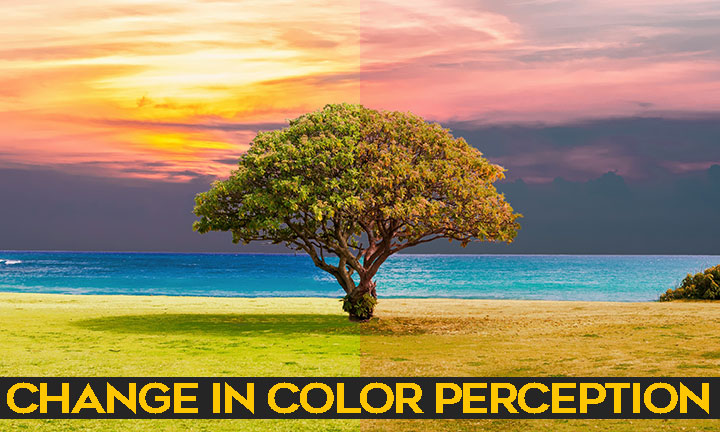
Research suggests that it can, in some cases. Studies have reported changes in colour discrimination in children with amblyopia, while other research suggests that amblyopia may affect broader aspects of visual processing, including contrast sensitivity, motion perception, and contour perception.
At the same time, this does not mean every child or adult with amblyopia will notice an obvious problem with colour. In many cases, colour vision may appear largely normal in daily life, especially when the amblyopia is mild or when the main difficulty is related more to visual clarity and binocular function (eye coordination and depth perception).
The most accurate way to explain it is that amblyopia may affect colour perception in some patients, but it is usually not the most obvious or dominant visual symptom.
Why Color Perception May Be Affected
A useful way to understand this is that amblyopia is not only an eye problem. It is also related to how the brain processes visual information from the eyes. . When the brain underuses or suppresses input from one eye, it makes sense that the effects may extend beyond sharpness of vision alone.
Possible reasons color vision may be affected include:
- Reduced quality of visual input from the amblyopic eye
- Suppression of the weaker eye by the brain
- Broader changes in how the brain processes visual signals
- Differences between types of amblyopia, such as strabismic amblyopia versus anisometropic amblyopia
This helps explain why some studies have found differences in color discrimination, even when the person’s main complaint is not about color ]. The weaker eye may not only see less clearly. It may also process certain visual information less efficiently.
Is the Problem The Same In Every Type Of Amblyopia?
No. Amblyopia does not affect every patient in the same way, and different types of amblyopia can produce different patterns of visual deficit.
For example, strabismic amblyopia, anisometropic amblyopia, and mixed forms may not show the same findings when it comes to colour perception. Some patients may show measurable differences in colour discrimination , while others may mainly have difficulties with visual acuity, binocular balance, depth perception, or reading-related visual performance.
What Patients Or Parents May Notice
In everyday life, color vision changes in amblyopia are usually not the first thing that families notice. Most children with amblyopia do not complain that colors look wrong. More common, parents or patients many notice issues such as:
- One eye seeing less clearly
- Poorer depth perception
- Difficulty with reading or visual tracking
- Eye turn or visible misalignment
- Visual discomfort or slower visual performance in some visual tasks
If color perception is affected, the difference may be subtle. It may only become clearer during formal testing than in casual daily life. This is one reason the topic is interesting in research, even though it is not usually the main concern during clinics visits.
What Amblyopia Is More Likely And Less Likely To Affect
| Visual area | How commonly it is affected in amblyopia |
| Visual acuity | Commonly affected |
| Binocular vision | Commonly affected |
| Depth perception | Often affected, especially in strabismic cases |
| Contrast sensitivity | Can be affected |
| Color vision | May be affected in some patients, but usually less obvious |
Does This Mean Amblyopia Causes Color Blindness?
No. That is an important distinction. Amblyopia and color blindness are not the same thing.
Classic color vision deficiency is often inherited and is usually related to how the cone photoreceptors in the retina respond to colorAmblyopia, on the other hand, is a developmental visual disorder linked to how the brain uses visual input from the eyes.
Therefore, even if an amblyopic eye shows weaker color discrimination during testing, this does not necessarily mean the person has inherited color blindness. The cause, mechanisms, and overall visual patter are different.
Why This Still Matters Clinically
Even though color vision is not the main issue in most amblyopia cases, the topic still matters because it shows that amblyopia can affect more than just clarity of vision. It supports the broader understanding that amblyopia is a condition involving multiple aspects of visual processing, not only how well a person reads an eye chart.
This also fits with the modern approach to amblyopia care, where eye care professionals look not only at visual acuity, but also at binocular vision, depth perception, functional vision, and day-to-day visual performance.
For children with amblyopia or suspected visual development concerns, parents may consider seeking assessment from an ophthalmologist. A proper eye assessment can help identify possible causes, determine the child’s visual needs, and guide the most suitable management plan. When needed, children’s eye conditions may be assessed by doctors, such as Dr. Mohd Ishaq Bin Abdul Hakim, Consultant Ophthalmologist.
Conclusion
Amblyopia does not usually cause classic color blindness. However, it may influence certain aspects of visual processing such as contrast sensitivity,fine visual perception, and in some patients, subtle color discrimination. In daily life, these colour-related differences are usually less noticeable than reduced visual clarity, poor depth perception, or difficulty using both eyes together. Still, understanding the relationship between amblyopia and color vision helps explain that lazy eye involves more than visual sharpness alone, as the brain’s visual processing also plays an important role.