When a child begins amblyopia treatment, parents naturally hope for the best possible visual improvement. Questions such as “Will my child’s vision return to normal?”, “How long will treatment take?”, and “Will the weaker eye fully catch up?” are very common.
The good news is that many children experience meaningful improvement with appropriate treatment. However, the degree of recovery varies from child to child and depends on several important factors, including the child’s age, the cause and severity of the amblyopia, and how consistently treatment is followed.
Understanding realistic expectations is important because amblyopia treatment is usually gradual, individualised, and influenced by both the severity of the condition and the timing of intervention. Improvements often occur over months instead of days, and children with similar diagnoses may respond differently to the same treatment plans.
This article explains what families can realistically expect from amblyopia treatment, why outcomes differ between children , and what “successful treatment” actually means in practice. It also highlights that the goal is not always to achieve perfect vision, but to help each child reach the best visual development possible.
Why Setting Realistic Expectations From The Beginning Matters
Amblyopia treatment is most effective when it is followed consistently over time. Families who expect dramatic improvement within a few weeks may become discouraged if progress appears slow, making it more difficult to maintain treatment routines.
In reality, ophthalmologists usually assess progress over multiple follow-up visits rather than after only a few days or weeks. Visual improvement is commonly gradual, and treatment plans are adjusted according to how the child responds over time.
Setting realistic expectations is therefore an important part of treatment. When families understand the expected pace of recovery, they are often better prepared to stay consistent with glasses, patching, atropine eye drops, and scheduled follow-up appointments.
What Is Considered A Successful Outcome
A successful outcome does not always mean that both eyes achieve exactly the same level of vision .
For many children, success means that the weaker eye improves significantly, the difference between the two eyes becomes much smaller, and the child develops better overall visual function.
A realistic good outcome may include:
- Better vision in the weaker eye
- A smaller difference in vision between the two eyes
- Better visual function for learning and everyday activities
- Improved binocular (two-eye) vision in some children
- Reduced dependence on the stronger eye
- Better depth perception, where appropriate
Even if a slight difference in vision remains, these improvements can have an important positive impact on a child’s daily life and future visual health.
Why Treatment Outcomes n Vary
Every child responds differently to amblyopia treatment. Several factors can affect both the amount of improvement and the time required to achieve it .
These include:
- The child’s age when treatment begins
- The severity of the amblyopia
- The underlying cause, such as refractive error (anisometropia), strabismus, or visual deprivation
- How early the condition is detected
- How consistently glasses, patching, or atropine treatment are followed
- Whether other eye conditions or developmental conditions are present
This is why two children with the same diagnosis may have different treatment journeys and different final outcomes.
Improvement Usually Takes Time
Parents often hope that once treatment begins, the weaker eye will improve quickly. In some children, particularly those with refractive amblyopia, vision may begin improving after the correct glasses are prescribed. But in many children, change is more gradual and is monitored over repeated visits across weeks or months.
This does not mean the treatment is not working.
Instead, ophthalmologists usually look for steady improvement over time, rather than expecting dramatic changes between individual visits.
A child who is still using glasses, patching, or atropine after several months is not automatically considered failing treatment. In many cases, this gradual pattern is exactly what doctors expect.
Unrealistic vs Realistic Expectations
| Expectation | More realistic view |
| Vision should improve immediately | Improvement often takes time and is monitored over repeated follow-up visits |
| Every child will achieve perfect equal vision in both eyes | Many children improve greatly, although some may continue to have mild residual amblyopia |
| More patching or treatment always leads to faster recovery | Treatment should be individualised and followed as prescribed by the ophthalmologist |
| Slow improvement means treatment has failed | Steady, gradual progress is common and can still represent successful treatment |
| Once treatment ends, amblyopia can never return | Some children require continued follow-up because recurrence can happen, particularly during childhood |
The Importance Of Treatment Adherence
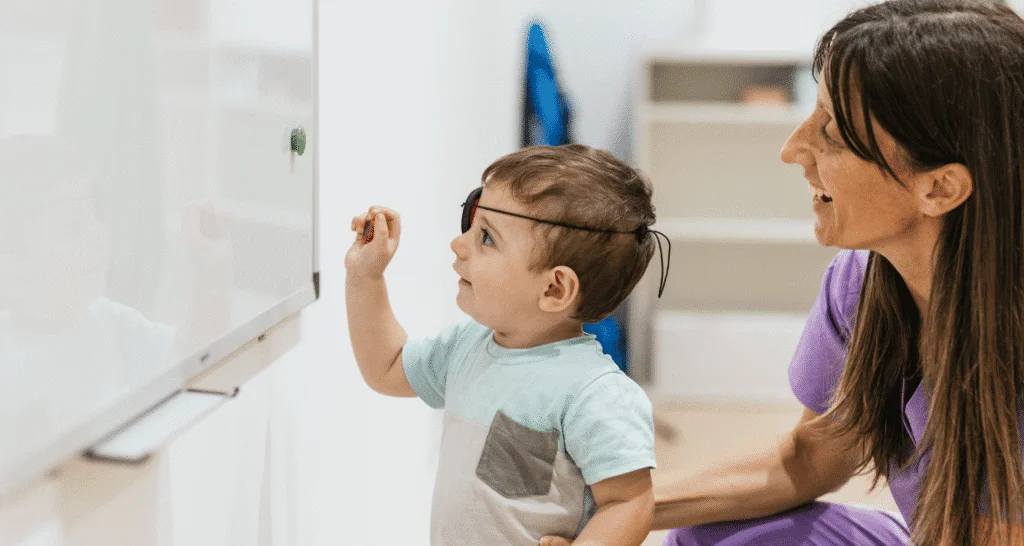
Even the most appropriate treatment plan cannot achieve its full benefit if it is not followed consistently.
This is especially true for patching therapy, where the prescribed patching time may differ from the amount of patching actually completed at home. Likewise, inconsistent glasses wear, missed atropine doses, or missed follow-up appointments may reduce the potential for visual improvement.
Good adherence gives children the best opportunity to achieve the maximum improvement their visual system is capable of during the treatment period.
When Improvement May Be More Limited
Some children may achieve less visual recovery despite receiving appropriate treatment and following recommendations carefully.
This is more likely when:
- The amblyopia is severe at diagnosis
- Treatment begins later in childhood
- The underlying eye condition is more complex
- The developing visual system received inadequate visual stimulation during the critical period of visual development
In these cases, realistic expectations may include:
- Significant improvement, but not complete equality with the eyes
- A longer treatment period
- Ongoing follow-up after treatment
- Some remaining difference in vision despite successful treatment
Even when complete recovery is not possible, treatment is often still worthwhile because it can improve vision, support binocular visual function where possible, and reduce long-term reliance on the stronger eye.
Questions Parents Can Ask During Follow-Up
Regular follow-up visits give families an opportunity to better understand their child’s progress.
Helpful questions include:
- Is my child’s vision improving as expected?
- Has the weaker eye improved on the vision chart?
- Is the difference between the two eyes getting smaller?
- Do you expect further improvement?
- Under what circumstances would the treatment plan be changed ?
These questions can help parents understand whether the child’s progress is following the expected course and whether any adjustments to treatment are needed.
Success Is About More Than The Eye Chart
Visual acuity remains one of the most important ways to measure treatment success, but it is not the only consideration.
Successful treatment may also help:
- Improve how the child uses vision during reading, learning, and play
- Reduce long-term dependence on the stronger eye
- Support healthier binocular visual development where possible
- Lower the risk associated with relying on only one well-seeing eye later in life
For these reasons, a child may benefit substantially from treatment even if perfect equality between the eyes is not achieved.
Conclusion
Setting realistic expectations for amblyopia treatment outcomes helps families better understand that visual improvement is usually gradual and influenced by many individual factors. Early detection, timely intervention, consistent treatment, and regular follow-up all play important roles in giving children the best opportunity for visual improvement .
Although not every child achieves completely equal vision in both eyes , many still experience meaningful gains that improve visual function, support learning and daily activities, and contribute to better long-term eye health .
For children undergoing amblyopia treatment, proper assessment helps parents understand the cause of the condition, the expected treatment pathway, and the likely visual outcome. An ophthalmologist such as Dr. Koh Yi Ni, Consultant Ophthalmologist, can assess amblyopia and other paediatric eye concerns, then recommend a suitable treatment plan based on the child’s individual needs. This may include glasses, patching, atropine therapy, and regular follow-up to monitor visual development over time.